


Description
Introduction
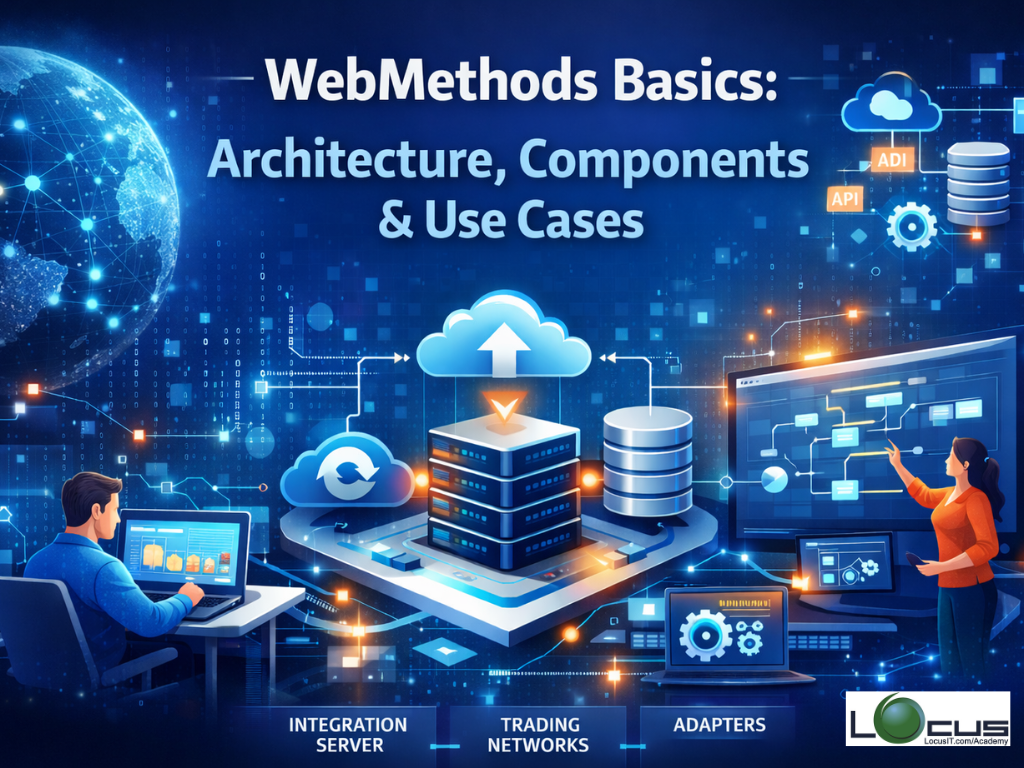
WebMethods is a leading enterprise integration platform that enables organizations to seamlessly connect applications, services, APIs, and data across on-premises and cloud environments. This training provides a strong foundation in WebMethods architecture, core components, and real-world use cases, helping learners understand how integration solutions are designed and implemented in enterprise landscapes.
The course is ideal for professionals who want to build a clear conceptual understanding of WebMethods and how it supports SOA, API-led integration, B2B integration, and hybrid integration scenarios.
Prerequisites
- Basic understanding of enterprise applications and business processes
- Familiarity with integration concepts (helpful but not mandatory)
- Basic knowledge of XML, JSON, or web services is an advantage
- No prior WebMethods experience required
Table of Contents
Module 1: Introduction to WebMethods
- Overview of Enterprise Integration
- What is WebMethods?
- Key Features and Benefits
- WebMethods in Modern Digital Enterprises
Module 2: WebMethods Platform Architecture
- High-Level WebMethods Architecture
- On-Premises vs Cloud Integration
- Runtime, Design-Time, and Management Layers
- Integration Patterns Supported by WebMethods
Module 3: Core WebMethods Components
- Integration Server
- Designer
- Universal Messaging
- API Gateway
- My WebMethods Server (MWS)
- Trading Networks
- WebMethods.io Overview
Module 4: Integration Concepts in WebMethods
- Services and Flows
- Adapters and Connectors
- Messaging and Event-Driven Integration
- Error Handling and Logging Basics
Module 5: WebMethods Integration Scenarios
- Application-to-Application (A2A) Integration
- B2B Integration Basics
- API-Led Integration
- Cloud and Hybrid Integration Scenarios
Module 6: Common WebMethods Use Cases
- ERP and CRM Integration
- Legacy System Integration
- Partner and Supplier Connectivity
- Data Synchronization and Transformation
- Event-Driven Business Processes
Module 7: Monitoring, Management & Security Basics
- Monitoring Integrations
- Basic Security Concepts
- User Roles and Access Control
- High Availability and Scalability Overview
Module 8: Best Practices and Next Steps
- Integration Design Best Practices
- Performance and Scalability Considerations
- Typical WebMethods Project Lifecycle
- Learning Paths and Advanced WebMethods Modules


Reviews
There are no reviews yet.