


Description
Introduction
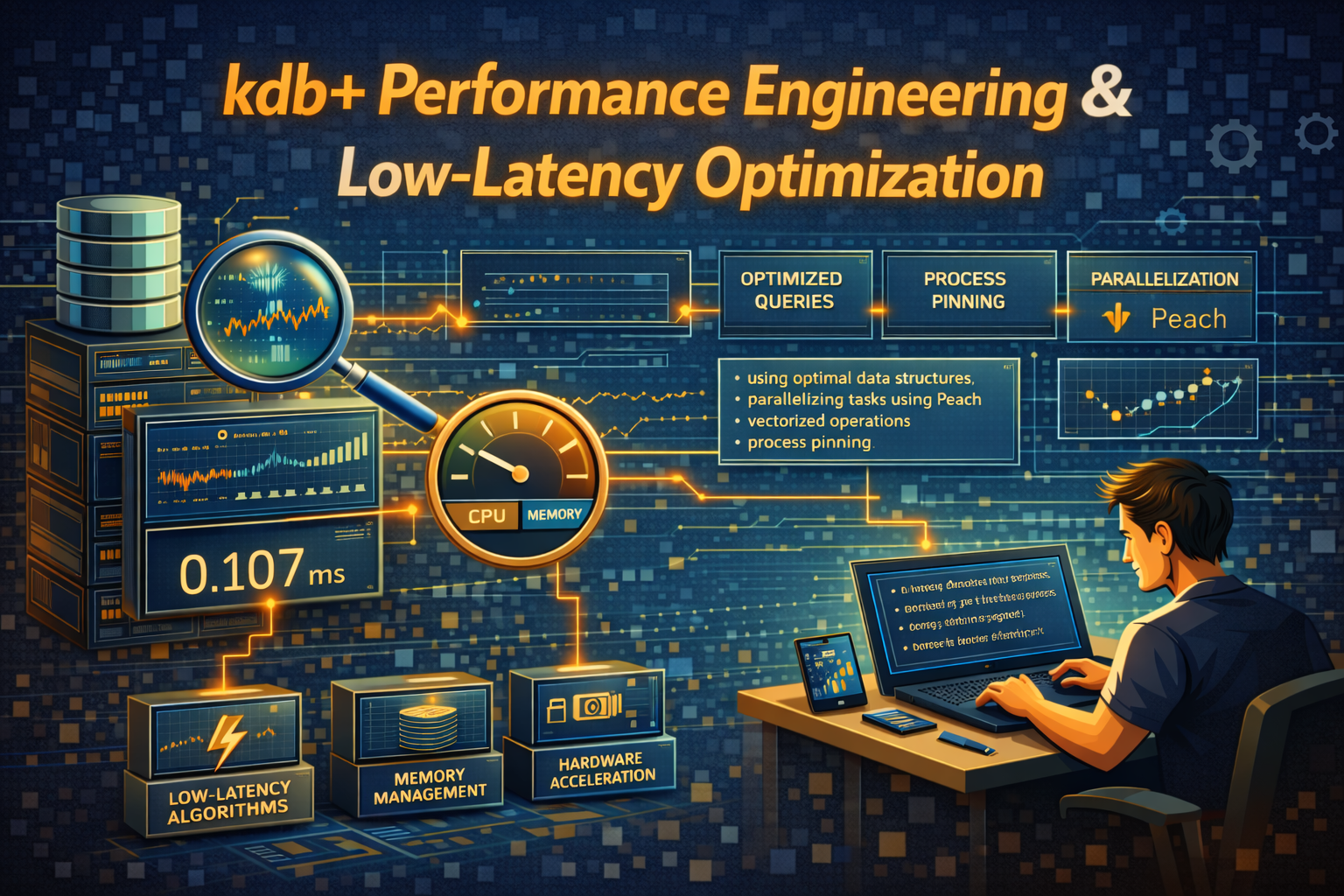
In today’s high-frequency, data-intensive environments, performance is not optional — it is a competitive advantage. This advanced training on kdb+ Performance Engineering & Low-Latency Optimization focuses on designing, tuning, and optimizing high-throughput, ultra-low-latency systems using kdb+ and the q language.
Participants will learn how to:
- Engineer high-performance tick architectures
- Minimize query latency and maximize throughput
- Optimize memory, CPU, and I/O usage
- Tune real-time and historical databases
- Build scalable, production-grade kdb+ infrastructures
This course is ideal for performance engineers, quantitative developers, data engineers, and architects working in capital markets, telecom, IoT, and real-time analytics systems.
Prerequisites
- Strong working knowledge of kdb+ and q fundamentals
- Understanding of tick architecture (Tickerplant, RDB, HDB)
- Basic Linux command-line knowledge
- Familiarity with performance concepts (CPU, memory, disk I/O, network latency)
- Experience working with real-time or time-series data systems
- Experience in high-frequency trading (HFT) systems
- Exposure to distributed systems concepts
Table of Contents
Module 1: Performance Foundations in kdb+
- Understanding kdb+ architecture and execution model
- Columnar storage and vectorized computation
- Memory-mapped files and I/O model
- Single-threaded execution model and implications
- Latency vs Throughput trade-offs
Module 2: Profiling & Benchmarking Techniques
- Measuring latency and throughput in q
- Using system commands for diagnostics
- Micro-benchmarking q functions
- Identifying bottlenecks (CPU, memory, disk, network)
- Building repeatable performance test frameworks
Module 3: Memory Optimization Strategies
- Memory allocation and garbage collection behavior
- Avoiding unnecessary copies
- Efficient data structures in q
- Symbol management and enumerations
- Attribute usage (sorted, parted, grouped)
- Compression techniques and trade-offs
Module 4: Query Optimization & Execution Tuning
- Understanding query execution paths
- Optimizing joins and asof joins
- Partition pruning and segment elimination
- Indexed lookups and attribute strategies
- Avoiding costly operations in large datasets
- Vectorization best practices
Module 5: Tick Architecture Performance Tuning
- Tickerplant throughput optimization
- RDB write performance tuning
- HDB query acceleration
- End-of-day processing optimization
- Replay performance engineering
- Designing for predictable latency
Module 6: Low-Latency Design Patterns
- Designing zero-copy pipelines
- Minimizing serialization overhead
- IPC performance tuning
- Batching vs streaming trade-offs
- CPU affinity and process pinning
- NUMA-aware design principles
Module 7: Disk & Storage Optimization
- SSD vs NVMe considerations
- Filesystem tuning for kdb+
- Partitioning strategies
- Compression vs performance trade-offs
- Parallel loading and write strategies
Module 8: Parallelism & Scaling Strategies
- Multi-process scaling in kdb+
- Distributed query patterns
- Load balancing techniques
- Horizontal vs vertical scaling
- Real-time failover strategies
Module 9: Production Hardening & Monitoring
- Latency monitoring frameworks
- Detecting performance degradation
- Capacity planning models
- High availability design
- Disaster recovery considerations
- Production tuning checklist
Module 10: Advanced Optimization Case Studies
- High-frequency trading architecture tuning
- Market data feed optimization
- Backtesting acceleration techniques
- Real-world performance troubleshooting scenarios
- Performance benchmarking lab


Reviews
There are no reviews yet.