


Description
Introduction
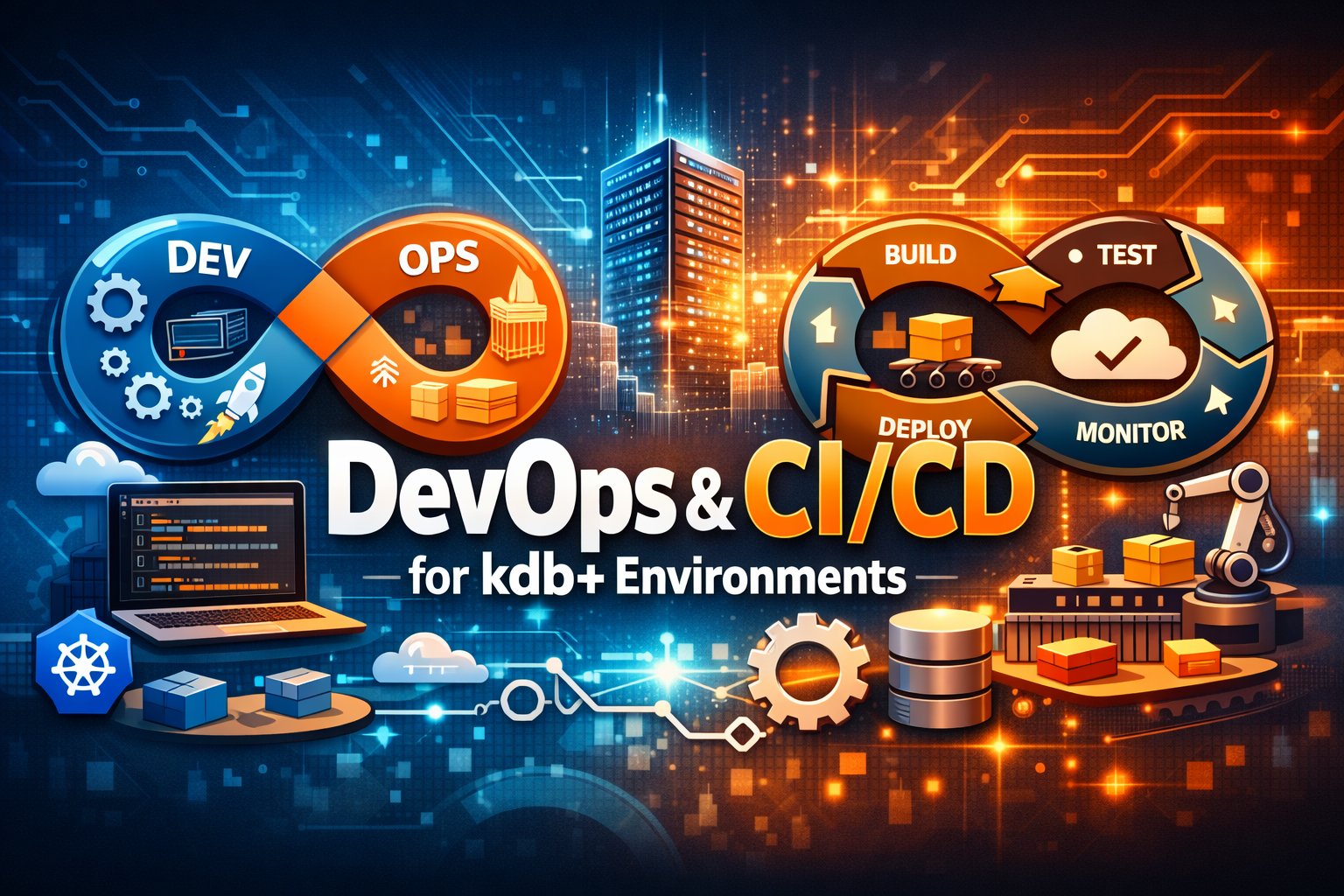
In modern data-driven enterprises, deploying and maintaining high-performance time-series systems requires more than just strong development skills—it demands robust DevOps practices. This training program focuses on implementing DevOps principles and CI/CD pipelines specifically tailored for kdb+ & q environments.
Participants will learn how to automate builds, testing, deployments, monitoring, and scaling of kdb+ systems across development, staging, and production environments. The course emphasizes version control, containerization, orchestration, automated testing of q scripts, performance validation, and production-grade deployment strategies for low-latency systems.
By the end of this training, learners will be able to design, implement, and manage CI/CD pipelines optimized for kdb+ infrastructures in financial and enterprise environments.
Prerequisites
- Basic understanding of kdb+ architecture
- Working knowledge of q programming
- Familiarity with Linux/Unix command line
- Basic understanding of Git and version control concepts
- General awareness of DevOps principles
- Understanding of time-series database concepts
Table of Contents
Module 1: DevOps Fundamentals for kdb+
- DevOps principles and lifecycle
- CI/CD overview in time-series systems
- Dev vs Production in kdb+ environments
- Infrastructure challenges in low-latency systems
Module 2: Version Control for q Projects
- Structuring kdb+ projects for Git
- Managing schema, scripts, and configuration files
- Branching strategies (GitFlow, trunk-based)
- Code review best practices for q
- Handling large datasets in repositories
Module 3: Automated Testing in q
- Unit testing frameworks for q
- Writing testable q functions
- Mocking data in kdb+
- Regression testing for time-series systems
- Performance benchmarking tests
Module 4: CI Pipelines for kdb+
- CI concepts and workflow
- Build automation for q projects
- Static code validation
- Automated test execution
- Pipeline triggers and artifacts
Module 5: Containerization of kdb+
- Introduction to Docker
- Creating Dockerfiles for kdb+
- Managing runtime configurations
- Secure handling of license files
- Multi-container architectures (Tickerplant, RDB, HDB)
Module 6: Orchestration & Environment Management
- Kubernetes fundamentals
- Deploying kdb+ containers
- Stateful vs stateless components
- ConfigMaps and Secrets
- Scaling real-time kdb+ systems
Module 7: Deployment Strategies
- Blue-Green deployment
- Canary releases
- Rolling updates
- Zero-downtime deployment techniques
- Rollback strategies
Module 8: Monitoring & Observability
- Logging strategies in kdb+
- Metrics collection
- Performance monitoring
- Alerting strategies
- Latency tracking in production
Module 9: Security & Compliance
- Secure configuration management
- Access control in kdb+
- Secrets management
- Audit logging
- Regulatory considerations in financial systems
Module 10: Production Hardening & Disaster Recovery
- Backup strategies for HDB
- High availability setups
- Failover mechanisms
- Data replication approaches
- Incident response workflows
Module 11: End-to-End Project
- Designing a CI/CD pipeline for a sample kdb+ architecture
- Containerizing components
- Automated testing and validation
- Production deployment simulation
- Monitoring and rollback exercise


Reviews
There are no reviews yet.