


Description
Introduction
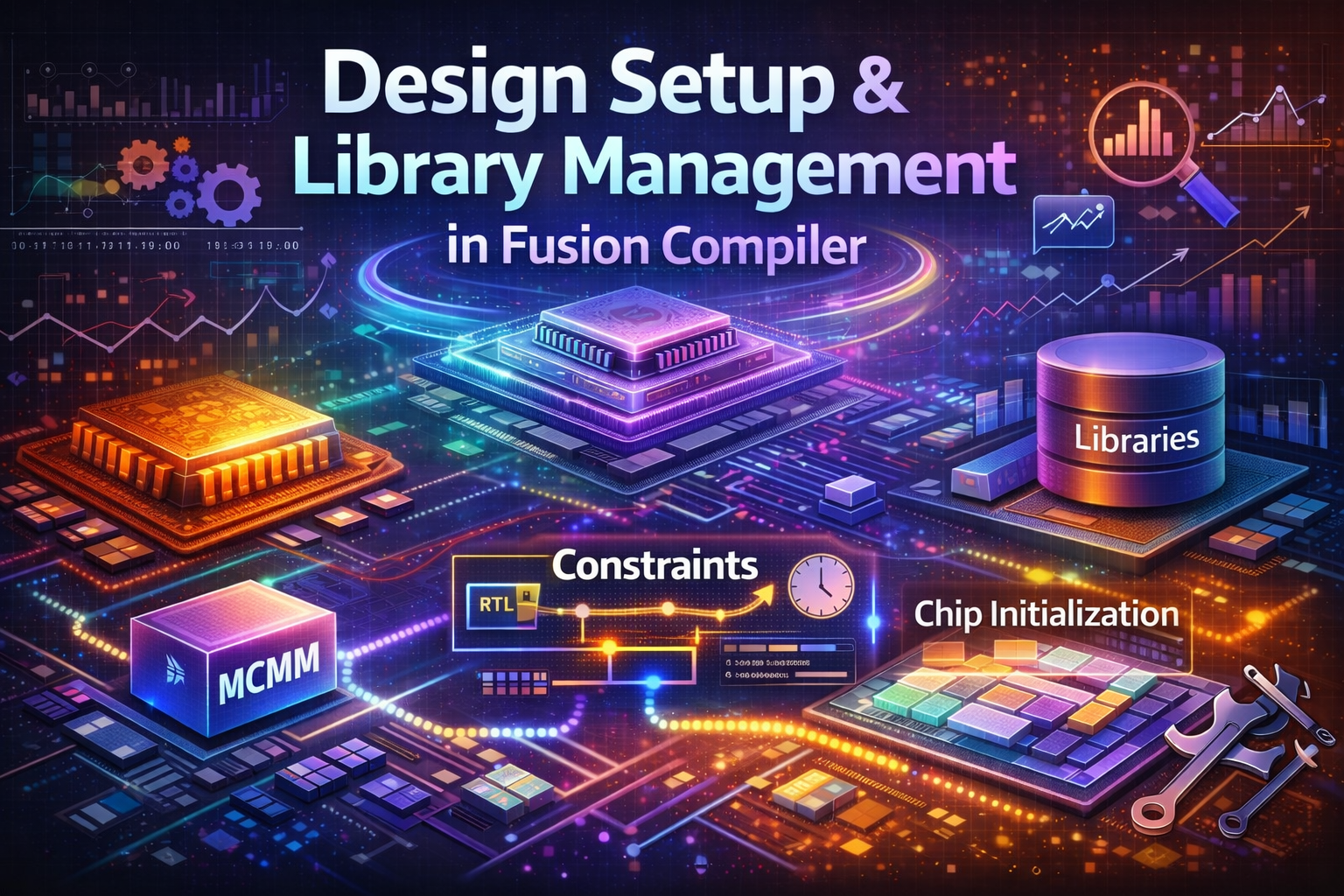
Synopsys Fusion Compiler is a unified RTL-to-GDSII platform that integrates synthesis, placement, routing, and optimization into a single environment. It enables efficient chip design convergence by combining advanced technologies like machine learning-driven optimization, multi-scenario analysis, and signoff-quality engines. Design setup and library management are critical initial steps that ensure accurate interpretation of design intent, technology data, and constraints for successful implementation.
Learner Prerequisites
- Basic understanding of digital IC design and VLSI concepts
- Familiarity with the physical design flow, including synthesis, placement, routing, and timing
- Knowledge of standard cell libraries and technology files
- Understanding of Linux or UNIX commands
- Basic scripting knowledge, preferably Tcl
Table of Contents
1. Fundamentals of Design Setup in Fusion Compiler
1.1 Overview of Physical Design Flow in Fusion Compiler
1.2 Understanding Design Setup Requirements
1.3 Key Components of Design Initialization
1.4 Setting Up Working Environment and Project Structure
1.5 Input File Types and Formats (RTL, Netlist, Constraints)
1.6 Introduction to MCMM (Multi-Corner Multi-Mode) Concepts
1.7 Design Import and Initial Sanity Checks
2. Library Fundamentals and Concepts
2.1 Types of Libraries (Logical, Physical, Timing)
2.2 Standard Cell Libraries and Technology Nodes
2.3 Liberty (.lib) File Structure and Interpretation
2.4 Milkyway and NDM Library Concepts
2.5 Technology Files and Layer Information
2.6 Variation Models and PVT Corners
2.7 Library Consistency and Validation Checks
3. Library Setup and Configuration
3.1 Creating and Managing Library Paths
3.2 Linking Logical and Physical Libraries
3.3 Loading and Verifying Technology Files
3.4 Setting Up Reference Libraries
3.5 Handling Multi-Library Environments
3.6 Library Mapping and Resolution Techniques
3.7 Debugging Library Setup Issues
4. Design Initialization and Environment Setup
4.1 Setting Design Variables and Tool Options
4.2 Creating Design Databases
4.3 Importing RTL/Netlist into Fusion Compiler
4.4 Floorplan-Aware Design Initialization
4.5 Managing Design Hierarchy
4.6 Initial Timing and Constraint Setup
4.7 Verifying Design Integrity Post-Setup
5. Constraints and Scenario Management
5.1 Introduction to SDC Constraints
5.2 Clock Definition and Propagation
5.3 Input/Output Constraints and Exceptions
5.4 Multi-Corner Multi-Mode (MCMM) Setup
5.5 Scenario Creation and Management
5.6 Constraint Validation and Debugging
5.7 Best Practices for Constraint Management
6. Advanced Library Management Techniques
6.1 Library Optimization for Performance and Power
6.2 Managing Large Library Sets Efficiently
6.3 Handling Library Updates and Version Control
6.4 Custom Library Creation and Integration
6.5 Low Power Libraries and Multi-Vt Cells
6.6 Library Characterization Overview
6.7 Best Practices for Library Usage
7. Quality Checks and Validation
7.1 Design Rule Checks (DRC) Awareness
7.2 Library and Design Consistency Checks
7.3 Timing Library Validation
7.4 Physical Library Verification
7.5 Debugging Setup and Initialization Errors
7.6 Reporting and Analysis Techniques
7.7 Pre-Implementation Checklist
8. Automation and Scripting in Setup Flow
8.1 Introduction to Tcl Scripting in Fusion Compiler
8.2 Automating Design Setup Tasks
8.3 Script-Based Library Configuration
8.4 Reusable Setup Frameworks
8.5 Debugging Scripts and Logs
8.6 Best Practices for Automation
8.7 Integration with CI/CD Flows
9. Best Practices and Industry Use Cases
9.1 Recommended Design Setup Methodologies
9.2 Common Pitfalls and How to Avoid Them
9.3 Real-World Case Studies
9.4 Efficient Data Management Techniques
9.5 Collaboration Across Design Teams
9.6 Documentation and Versioning Standards
9.7 Scaling Setup for Large Designs
10. Troubleshooting and Debugging Techniques
10.1 Identifying Common Setup Errors
10.2 Library Linking Issues and Fixes
10.3 Constraint Conflicts Resolution
10.4 Debugging Timing Setup Problems
10.5 Tool Log Analysis
10.6 Incremental Debugging Strategies
10.7 Support and Documentation Resources
Conclusion
This training provides a comprehensive understanding of design setup and library management in Fusion Compiler, enabling learners to efficiently initialize designs, configure libraries, manage constraints, and ensure a robust foundation for successful physical implementation and design closure.



Reviews
There are no reviews yet.