


Description
Introduction
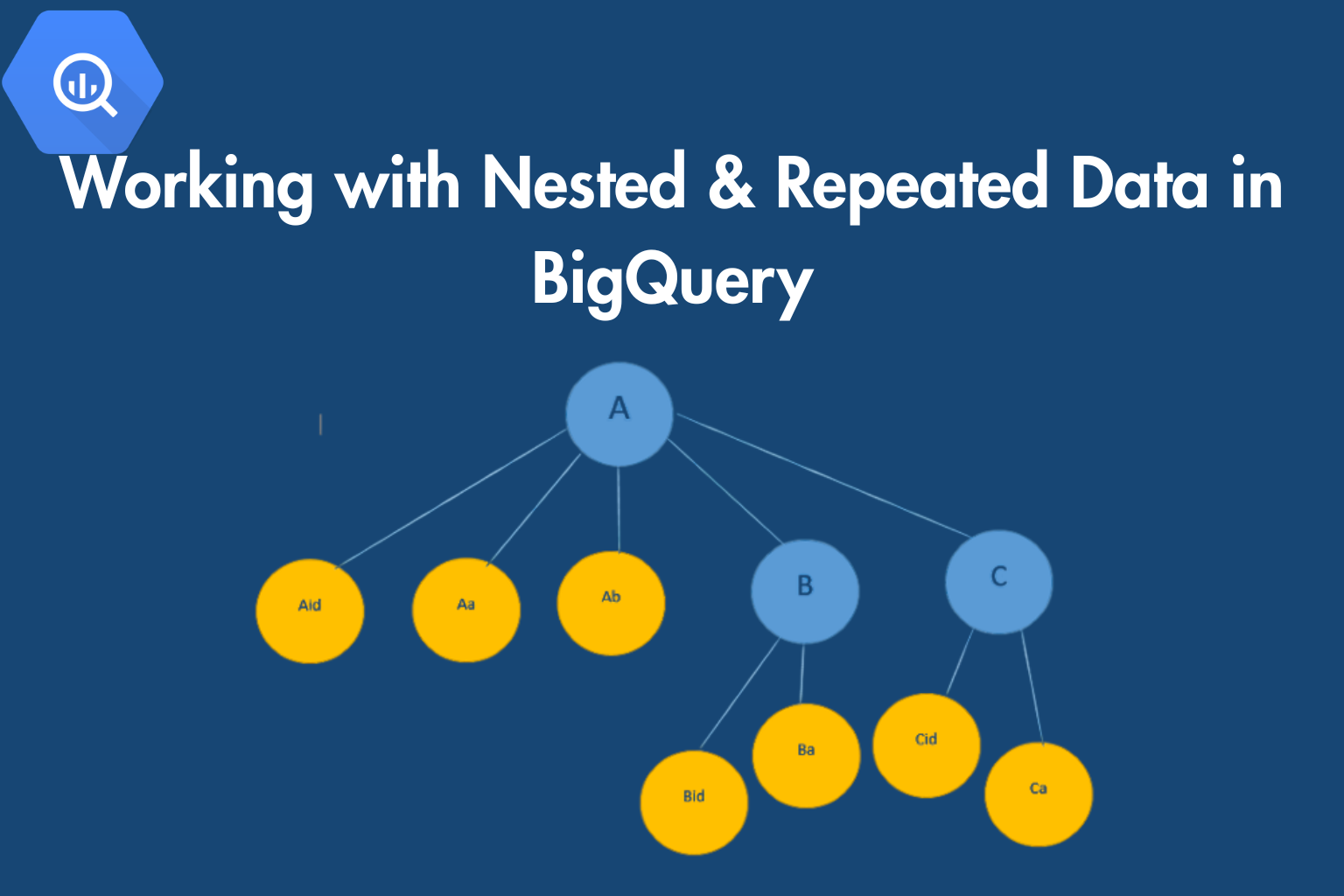
Google BigQuery is a fully managed and serverless data warehouse from Google Cloud. It is designed for scalable analytics on large datasets.It supports advanced data structures such as nested (STRUCT) and repeated (ARRAY) fields. In addition, these features allow flexible data modeling. Moreover, they are useful for handling complex data formats like JSON, event logs, and hierarchical datasets.Because of this flexibility, BigQuery is widely used for modern data analysis. Therefore, understanding nested and repeated data is essential for efficient query design.
Learner Prerequisites
- Basic understanding of SQL (SELECT, JOIN, WHERE, GROUP BY)
- Familiarity with relational database concepts
- Awareness of cloud data warehouse fundamentals
- Basic knowledge of JSON or semi-structured data (recommended)
- Understanding of BigQuery console or Google Cloud basics
Table of Contents
1. Introduction to Nested & Repeated Data in BigQuery
1.1 Understanding Structured vs Semi-Structured Data
1.2 Overview of Nested (STRUCT) Data Types
1.3 Overview of Repeated (ARRAY) Fields
1.4 Use Cases in Real-World Data Modeling
1.5 Benefits of Using Nested & Repeated Data
2. Working with Nested Data Structures (STRUCTs)
2.1 Creating Tables with Nested Fields
2.2 Querying Nested Fields Using Dot Notation
2.3 Filtering and Selecting Nested Attributes
2.4 Handling Multi-Level Nesting
2.5 Best Practices for Nested Schema Design
3. Working with Repeated Data (ARRAYs)
3.1 Understanding Repeated Fields in BigQuery
3.2 Querying Arrays Using UNNEST
3.3 Filtering and Aggregating Array Elements
3.4 Working with Arrays of STRUCTs
3.5 Common Pitfalls and Optimization Tips
4. Combining Nested and Repeated Data
4.1 Handling Complex JSON-like Structures
4.2 Querying Nested Arrays Together
4.3 Joining Flattened Data with Parent Tables
4.4 Managing Data Explosion Issues
4.5 Optimizing Query Performance
5. Data Transformation and Flattening Techniques
5.1 Using UNNEST for Data Normalization
5.2 Flattening Hierarchical Data for Analysis
5.3 Rebuilding Nested Structures from Flat Data
5.4 Handling Duplicate Rows After Flattening
5.5 When to Flatten vs Keep Nested
6. Performance Optimization & Best Practices
6.1 Partitioning and Clustering with Nested Data
6.2 Reducing Query Cost in Complex Structures
6.3 Efficient Use of ARRAY and STRUCT
6.4 Schema Design for Scalability
6.5 Common Performance Anti-Patterns
Conclusion
Working with nested and repeated data in Google BigQuery enables efficient modeling of complex datasets. It also improves flexibility in handling semi-structured data.
In addition, learners gain the ability to query hierarchical data effectively. They also understand how to transform and optimize such structures. Moreover, the course highlights best practices for performance tuning.As a result, participants can design efficient analytical workflows. Therefore, they will be able to handle real-world data scenarios with confidence.



Reviews
There are no reviews yet.