


Description
Introduction
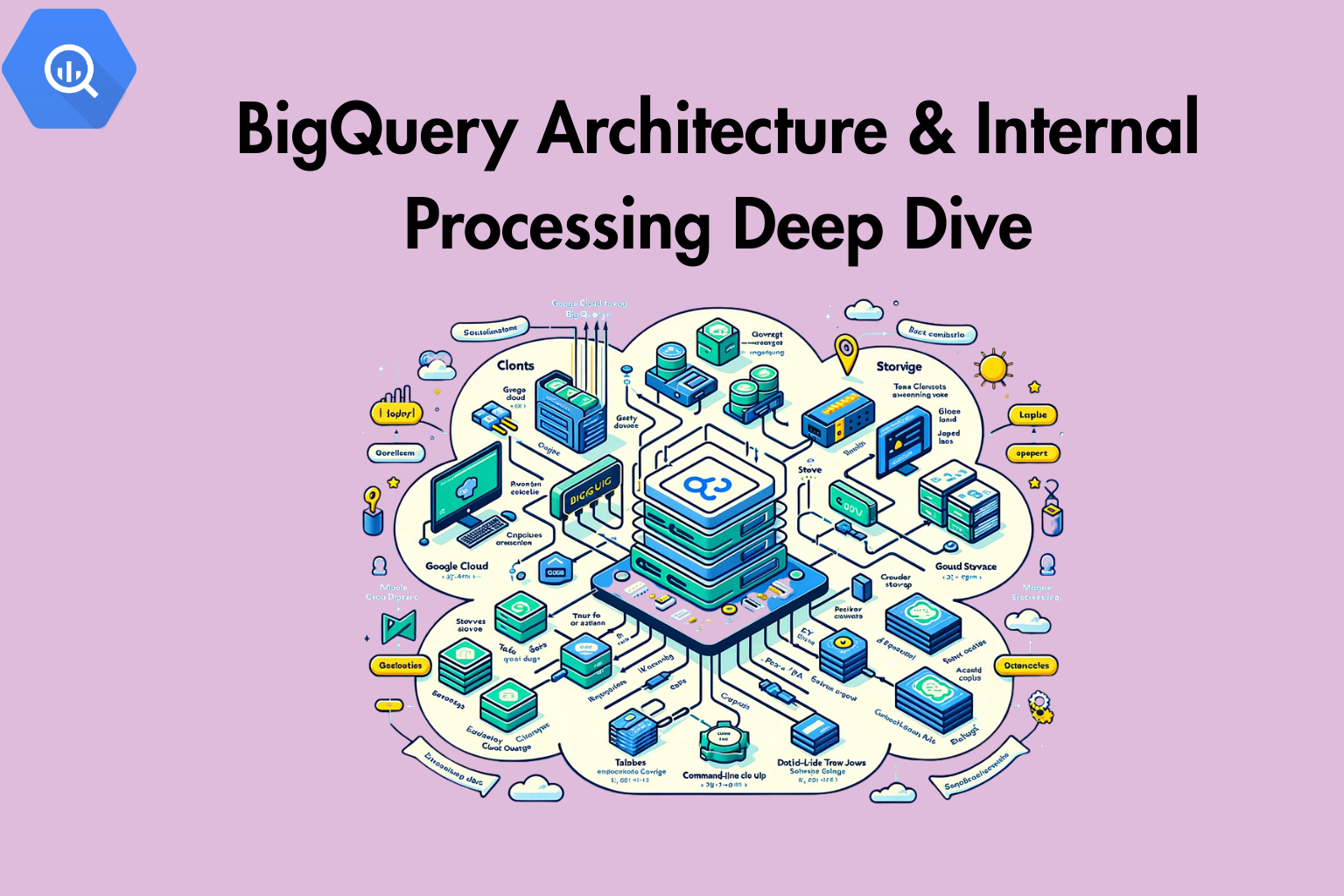
Google BigQuery is a fully managed and serverless data warehouse from Google Cloud. It is designed for high-performance analytics on massive datasets.It uses a distributed architecture. In addition, it separates storage and compute layers. This allows fast and scalable SQL-based querying. Moreover, it ensures efficient processing of large workloads.
This training focuses on internal architecture and query execution workflows. It also explains system-level processing concepts in detail.
Learner Prerequisites
- Basic knowledge of SQL (SELECT, JOIN, GROUP BY)
- Understanding of relational database concepts
- Familiarity with data warehousing fundamentals
- Basic awareness of cloud platforms and services
- Introductory understanding of analytics or ETL pipelines
Table of Contents
1. BigQuery Architecture Overview
1.1 Serverless architecture and managed infrastructure model
1.2 Separation of storage and compute layers
1.3 Distributed system design and scalability principles
1.4 Multi-tenant architecture and resource sharing
1.5 High-level request processing lifecycle
2. BigQuery Storage Layer Deep Dive
2.1 Columnar storage format (Capacitor engine)
2.2 Data encoding and compression techniques
2.3 Table partitioning and data segmentation
2.4 Storage replication and durability mechanisms
2.5 Metadata management and schema handling
3. Query Execution Engine & Processing Flow
3.1 SQL parsing and query validation process
3.2 Query optimizer and execution planning
3.3 DAG-based distributed execution model
3.4 Slot allocation and workload scheduling
3.5 Parallel execution and stage-wise processing
4. BigQuery Internal Components
4.1 Dremel execution engine architecture
4.2 Colossus distributed storage system integration
4.3 Jupiter high-speed networking infrastructure
4.4 Borg cluster resource management system
4.5 Component interaction and request flow
5. Data Distribution & Processing Strategies
5.1 Data shuffling and exchange operations
5.2 Hash-based partitioning techniques
5.3 Broadcast joins and distributed joins handling
5.4 Data locality optimization strategies
5.5 Skew handling and workload balancing
6. Performance Optimization Mechanisms
6.1 Query optimization and cost-based planning
6.2 Predicate pushdown and early filtering
6.3 Result caching and reuse mechanisms
6.4 Slot utilization and query concurrency control
6.5 Partition pruning and clustering benefits
7. Fault Tolerance & Reliability Architecture
7.1 Data replication and redundancy strategies
7.2 Automatic failure detection and recovery
7.3 Query retry and recomputation mechanisms
7.4 High availability and fault isolation design
7.5 Consistency, durability, and SLA guarantees
8. Security & Access Control Internals
8.1 IAM-based role and permission model
8.2 Row-level and column-level security enforcement
8.3 Encryption at rest and in transit mechanisms
8.4 Audit logging and monitoring architecture
8.5 Policy evaluation during query execution
Conclusion
This training provides a deep understanding of the internal architecture of Google BigQuery. It covers storage design, execution flow, and distributed processing.In addition, learners explore performance optimization and system reliability. They also understand how queries are executed at scale. Moreover, the course explains security and access control mechanisms.
As a result, participants gain strong architectural knowledge. Therefore, they can design efficient and high-performance analytics systems on Google Cloud.


Reviews
There are no reviews yet.