


Description
Introduction
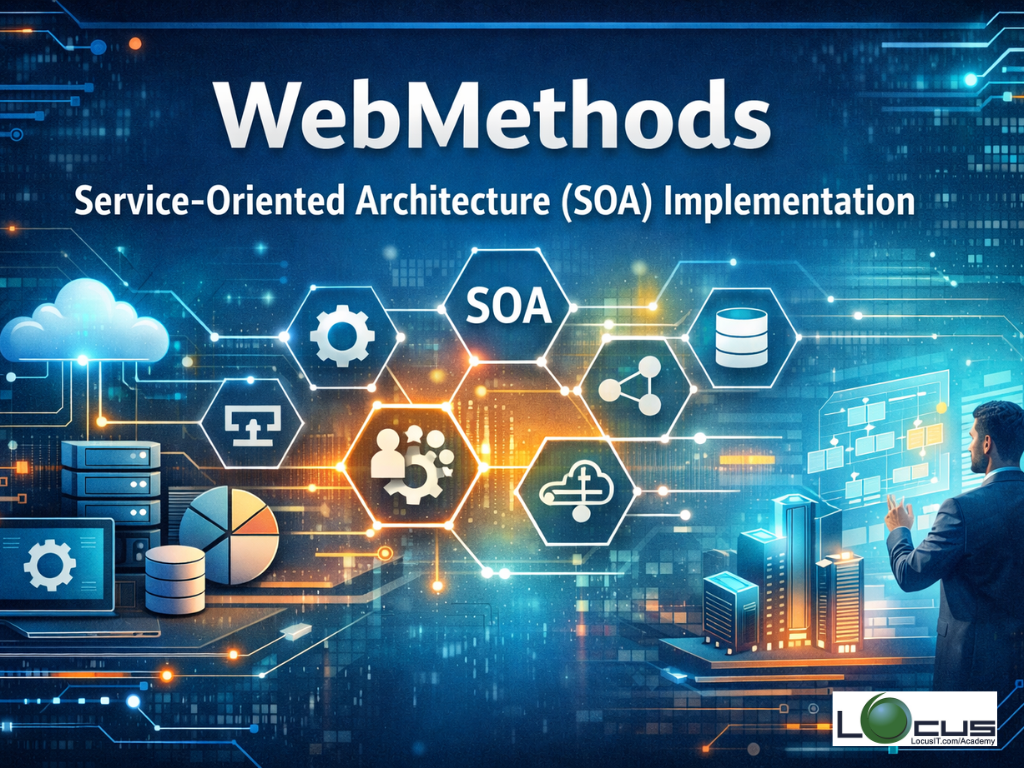
Service-Oriented Architecture (SOA) is a foundational integration approach that enables organizations to build flexible, reusable, and scalable enterprise systems. WebMethods SOA provides a robust platform for designing, deploying, governing, and managing services that support business agility and digital transformation.
This training focuses on implementing SOA using the WebMethods platform, covering service design principles, service lifecycle management, integration patterns, orchestration, security, and governance. Participants will gain both conceptual understanding and hands-on exposure to building enterprise-grade SOA solutions using WebMethods.
Prerequisites
- Basic understanding of enterprise application integration (EAI) concepts
- Familiarity with WebMethods Integration Server (recommended)
- Knowledge of XML, JSON, WSDL, and REST/SOAP services
- Basic programming or integration experience
- Understanding of business processes and enterprise systems (ERP, CRM, legacy apps)
Table of Contents
Module 1: Introduction to SOA and WebMethods
- What is Service-Oriented Architecture (SOA)?
- SOA vs Monolithic & Microservices Architectures
- Key SOA principles: Loose coupling, reusability, abstraction
- Overview of WebMethods SOA capabilities
- SOA reference architecture in WebMethods
Module 2: WebMethods SOA Architecture & Components
- WebMethods Integration Server in SOA
- WebMethods Designer for service development
- Universal Messaging and messaging backbone
- WebMethods Broker vs UM (conceptual overview)
- Role of Adapters in SOA implementations
Module 3: Service Design & Modeling
- Service identification and classification
- Designing reusable and coarse-grained services
- Contract-first vs code-first approaches
- Service interfaces, schemas, and canonical data models
- Best practices for service naming and versioning
Module 4: Implementing Services in WebMethods
- Creating SOAP and REST services
- Developing Flow and Java services
- Using WSDL, OpenAPI, and service descriptors
- Data mapping and transformation
- Exception handling in services
Module 5: Service Orchestration & Process Integration
- Introduction to service orchestration
- Designing composite services
- Using WebMethods for process-driven SOA
- Synchronous vs asynchronous orchestration
- Transaction management in SOA workflows
Module 6: SOA Integration Patterns
- Request–Response pattern
- Publish–Subscribe pattern
- Service façade and mediator patterns
- Content-based routing
- Error handling and compensation patterns
Module 7: Security in SOA Implementations
- SOA security challenges and best practices
- Authentication and authorization in WebMethods
- SSL, certificates, and keystores
- WS-Security and REST security concepts
- Securing services with policies
Module 8: Service Governance & Lifecycle Management
- Introduction to SOA governance
- Service lifecycle stages
- Service versioning and dependency management
- Policy enforcement and compliance
- Monitoring and auditing services
Module 9: Testing, Deployment & Performance
- Unit and integration testing of services
- Service virtualization and mock services
- Deployment strategies for SOA solutions
- Performance tuning and scalability considerations
- Handling high availability and failover
Module 10: Monitoring & Troubleshooting SOA Services
- Monitoring services using WebMethods tools
- Logging, error tracking, and alerts
- Diagnosing service failures
- Best practices for troubleshooting SOA environments
- Operational support considerations
Module 11: Real-World SOA Use Cases & Best Practices
- Enterprise SOA implementation scenarios
- Legacy system modernization using SOA
- Common SOA anti-patterns and pitfalls
- Migration strategies and future evolution
- SOA vs Microservices – positioning WebMethods
Module 12: Capstone / Hands-On Implementation (Optional)
- Designing an end-to-end SOA solution
- Implementing and exposing services
- Applying security and governance
- Testing, deployment, and review

Reviews
There are no reviews yet.