


Description
Introduction
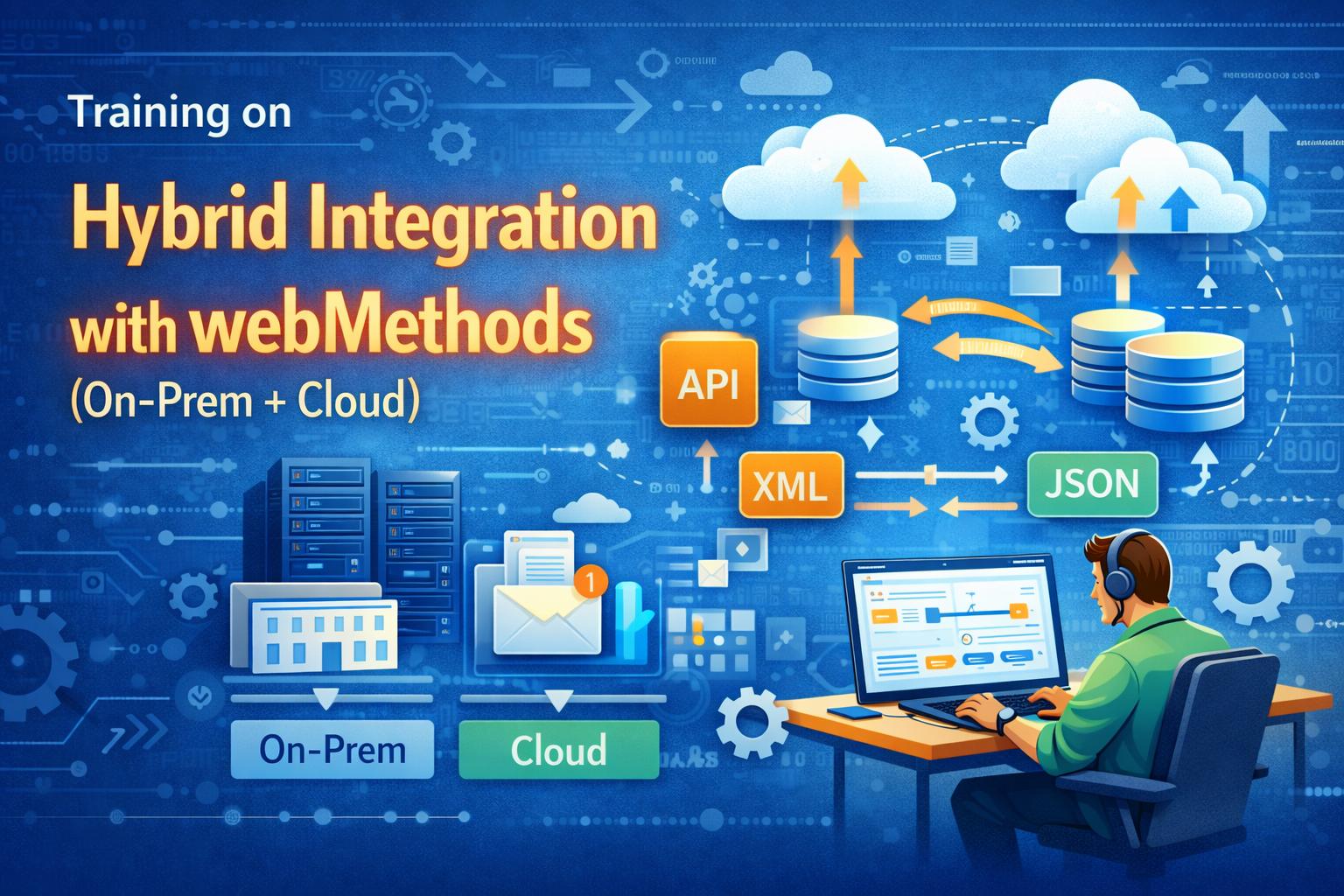
In today’s enterprise landscape, organizations often rely on a mix of on-premises systems and cloud applications. Managing seamless data flow and process integration across these environments is critical for operational efficiency, scalability, and agility.
This training on Hybrid Integration with WebMethods will guide participants through designing, implementing, and managing integrations that span on-premises systems and cloud-based applications. It covers both foundational concepts and hands-on implementation strategies using webMethods Integration Server, Cloud Integration capabilities, and API management tools.
By the end of this training, participants will be able to:
-
Understand the concepts of hybrid integration and its importance in modern IT landscapes.
-
Design hybrid integration solutions that connect on-premises systems with cloud applications.
-
Implement integrations using webMethods tools effectively.
-
Monitor, troubleshoot, and optimize hybrid integration flows.
Prerequisites
- Basic understanding of integration concepts and enterprise architecture.
- Familiarity with webMethods Integration Server, webMethods API Gateway, or webMethods Cloud Integration is beneficial but not mandatory.
- Knowledge of SOAP and REST APIs, JSON, and XML data formats.
- Understanding of on-premises IT systems (ERP, CRM, databases) and cloud platforms (AWS, Azure, SAP Cloud, Salesforce).
Table of Contents
Module 1: Introduction to Hybrid Integration
- What is hybrid integration?
- Benefits and challenges of hybrid integration
- Overview of on-premises vs. cloud integration
Module 2: webMethods Integration Platform Overview
- webMethods Integration Server
- webMethods Cloud Integration capabilities
- webMethods API Gateway and API Portal
- Integration with webMethods Trading Networks
Module 3: Architecture Patterns for Hybrid Integration
- Common hybrid integration patterns
- Point-to-point vs. mediated integration
- Event-driven vs. request-response integrations
Module 4: Connecting On-Premises Systems
- Adapter-based integration (ERP, databases, legacy systems)
- Configuring integration flows in Integration Server
- Best practices for secure on-premises connectivity
Module 5: Cloud Integration Essentials
- Connecting SaaS applications (Salesforce, SAP Cloud, etc.)
- Using cloud connectors and templates
- Cloud-to-cloud integration considerations
Module 6: Designing Hybrid Integration Solutions
- Combining on-premises and cloud integration
- API-led hybrid integration approach
- Mapping and transforming data between systems
Module 7: Security and Governance in Hybrid Integration
- Authentication and authorization (OAuth, SAML, API keys)
- Data encryption and secure transport
- API governance and lifecycle management
Module 8: Monitoring and Troubleshooting
- Using webMethods Monitoring and Analytics tools
- Error handling and retry strategies
- Performance optimization for hybrid integrations
Module 9: Hands-On Lab
- Implementing a sample hybrid integration scenario
- Connecting on-premises ERP with cloud CRM
- Testing and validating integration flows
Module 10: Best Practices and Advanced Topics
- Scalability and high availability strategies
- CI/CD for integration flows
- Future trends in hybrid integration
Module 11: Wrap-Up and Q&A
- Recap of key concepts
- Discussion on real-world hybrid integration challenges
- Q&A and additional resources
Reviews
There are no reviews yet.