


Description
Introduction
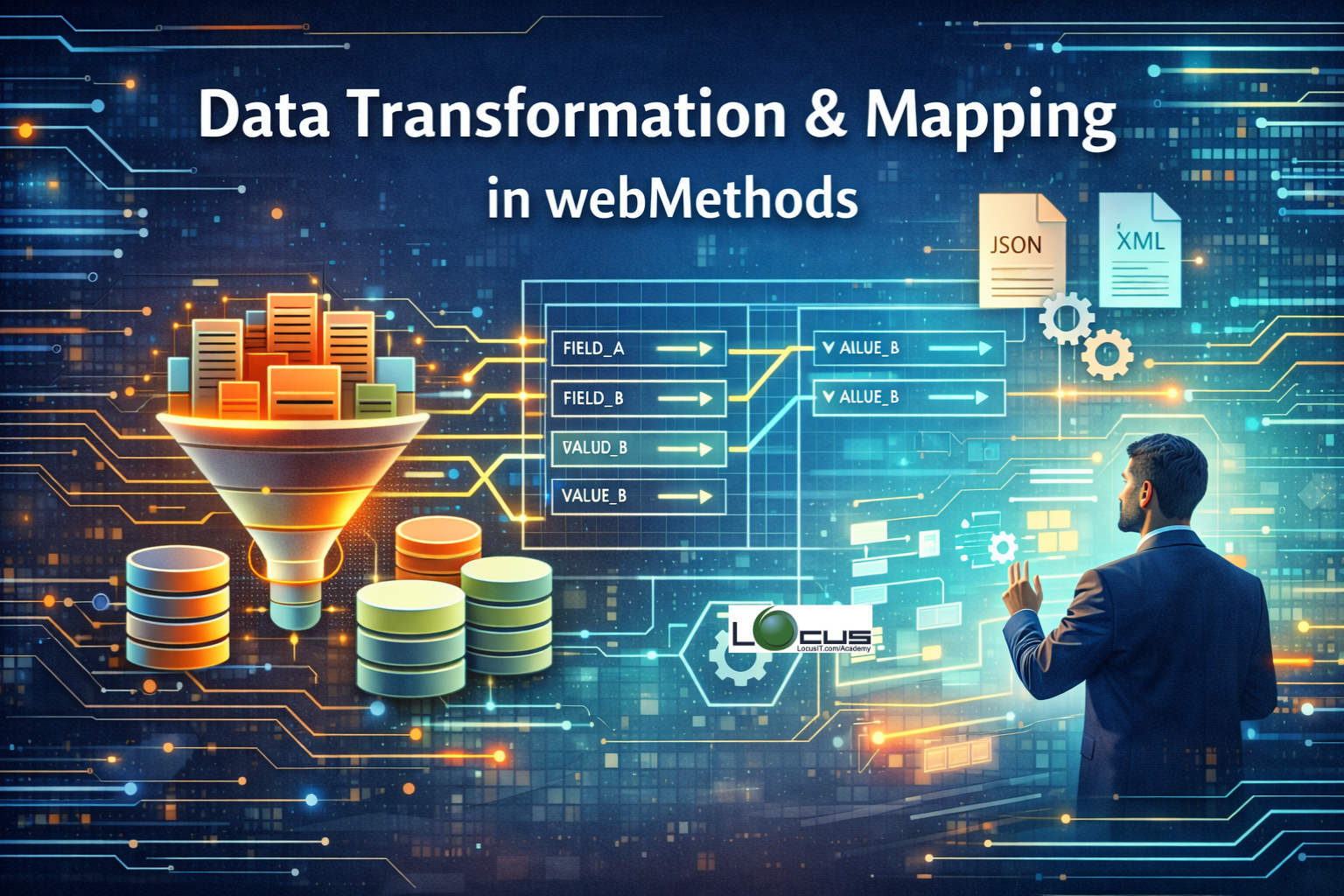
In enterprise integration, systems rarely speak the same language. Data formats, structures, and standards vary across applications—making data transformation and mapping a critical skill for any integration professional.
This training on Data Transformation & Mapping in webMethods provides a deep dive into how webMethods enables seamless data conversion between disparate systems. Participants will learn how to design, implement, and optimize data mappings using webMethods Designer, focusing on real-world integration scenarios involving XML, JSON, flat files, and enterprise schemas.
By the end of this course, learners will be confident in building robust, reusable, and performance-optimized data transformations that power reliable integrations across the enterprise.
Prerequisites
-
Basic understanding of webMethods Integration Server
-
Familiarity with webMethods Designer
-
Fundamental knowledge of:
- XML, JSON, and flat file structures
- Basic integration concepts (services, pipelines, flow services)
-
General awareness of enterprise application integration (EAI) concepts
(Prior hands-on experience with webMethods is helpful but not mandatory.)
Table of Contents
Module 1: Introduction to Data Transformation in webMethods
- What is data transformation and why it matters
- Common integration challenges solved by data mapping
- Role of transformation in synchronous and asynchronous integrations
- Overview of transformation tools in webMethods
Module 2: Understanding webMethods Data Structures
- IData and the pipeline concept
- Document Types and schemas
- Record, document lists, and complex structures
- Naming conventions and best practices
Module 3: Mapping Basics Using webMethods Designer
- Introduction to graphical data mapping
- Source and target document structures
- Basic field-to-field mappings
- Handling optional and mandatory fields
Module 4: Advanced Mapping Techniques
- Looping and repeating structures
- Conditional mappings
- Default values and data enrichment
- One-to-many and many-to-one mappings
Module 5: Data Transformation Functions
- Built-in mapping functions overview
- String, numeric, and date transformations
- Lookup and value replacement techniques
- Custom transformation logic
Module 6: Working with Different Data Formats
- XML to XML transformations
- JSON to XML and XML to JSON mappings
- Flat file and CSV data transformations
- Schema validation and error handling
Module 7: Using XSLT and Custom Transformers
- When to use graphical mapping vs XSLT
- XSLT basics in webMethods
- Integrating XSLT with Flow services
- Performance considerations
Module 8: Error Handling and Debugging Mappings
- Common mapping errors and pitfalls
- Debugging data transformations
- Handling nulls and missing fields
- Logging and tracing mapped data
Module 9: Performance Optimization & Best Practices
- Efficient mapping design strategies
- Reusable mappings and shared documents
- Memory and performance considerations
- Versioning and maintenance tips
Module 10: Real-World Use Cases & Hands-On Exercises
- End-to-end integration mapping scenarios
- B2B and enterprise system transformation examples
- Best practices from real projects
- Hands-on labs and practical exercises

Reviews
There are no reviews yet.