


Description
Introduction
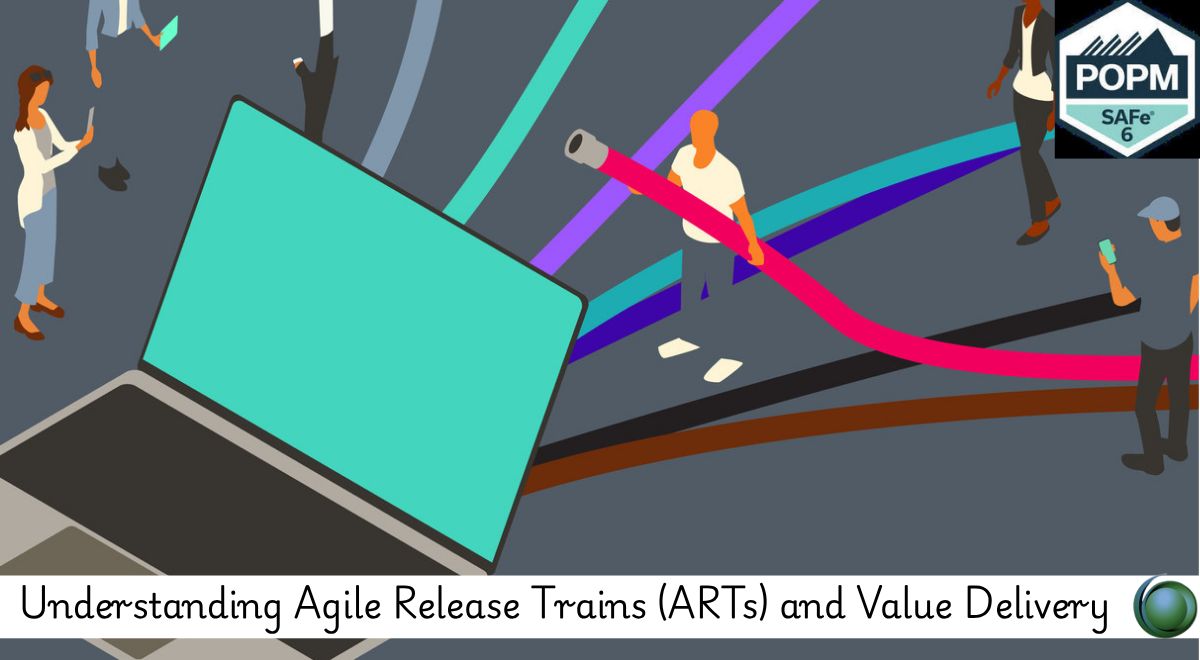
Agile Release Trains (ARTs) are the heartbeat of the Scaled Agile Framework (SAFe), enabling large organizations to align teams, accelerate delivery, and achieve continuous value flow. An ART is a long-lived team of Agile teams—typically 50 to 125 people—who plan, commit, develop, and deploy together in a synchronized manner. They work collectively toward a shared mission through Program Increments (PIs), ensuring alignment between strategy, execution, and customer needs.
This training provides a comprehensive understanding of how ARTs function, how they deliver value at scale, and how roles such as Product Managers, Release Train Engineers (RTEs), and System Architects collaborate to ensure predictable and high-quality outcomes. Participants will learn the structure, workflow, events, and best practices to maximize value delivery within a SAFe environment.
Prerequisites
-
Basic understanding of Agile and Scrum
-
Familiarity with product or software development lifecycle
-
Awareness of Lean-Agile principles (optional)
-
Interest in scaling Agile in large organizations
This training is ideal for Agile practitioners, managers, POs/PMs, Scrum Masters, engineers, and business stakeholders.
Table of Contents
1. Introduction to Agile Release Trains (ARTs)
1.1 What is an Agile Release Train?
1.2 Key Characteristics of ARTs
1.3 Benefits of ARTs in Large Organizations
1.4 How ARTs Support Business Agility
2. Structure and Roles within an ART
2.1 Agile Teams and Cross-Functional Collaboration
2.2 Role of the Release Train Engineer (RTE)
2.3 Role of Product Management and Product Owners
2.4 Role of System Architects/Engineering
2.5 Stakeholders, Business Owners, and Shared Services
3. ART Events and Cadence
3.1 Program Increment (PI) Planning
3.2 Iteration Execution and Iteration Reviews
3.3 System Demos
3.4 Inspect and Adapt (I&A) Workshop
3.5 Synchronization and Alignment Events
4. Value Delivery in ARTs
4.1 Understanding Value Streams
4.2 Mapping Features to Customer Value
4.3 Prioritizing Work Using WSJF
4.4 Delivering Value Through the Continuous Delivery Pipeline
4.5 Metrics for Tracking Value Delivery
5. ART Launch and Execution
5.1 Steps to Launch an ART
5.2 Readiness, Training, and Team Formation
5.3 ART Execution Best Practices
5.4 Managing Dependencies and Risks
5.5 Improving ART Performance Over Time
6. Collaboration, Communication, and Continuous Improvement
6.1 Strengthening Team Collaboration Across ARTs
6.2 Strategies for Cross-Team Coordination
6.3 Enabling Continuous Learning Culture
6.4 Using Feedback Loops to Improve Delivery Flow
Agile Release Trains (ARTs) are a powerful mechanism for scaling Agile and delivering continuous value across large enterprises. By aligning teams to a shared vision, applying synchronized planning and execution, and focusing on customer-centric outcomes, ARTs enable organizations to deliver high-quality products faster and more predictably. Understanding how ARTs function—and how they drive value delivery—empowers teams and leaders to collaborate effectively, optimize workflows, and continuously improve performance.

Reviews
There are no reviews yet.