


Description
Introduction
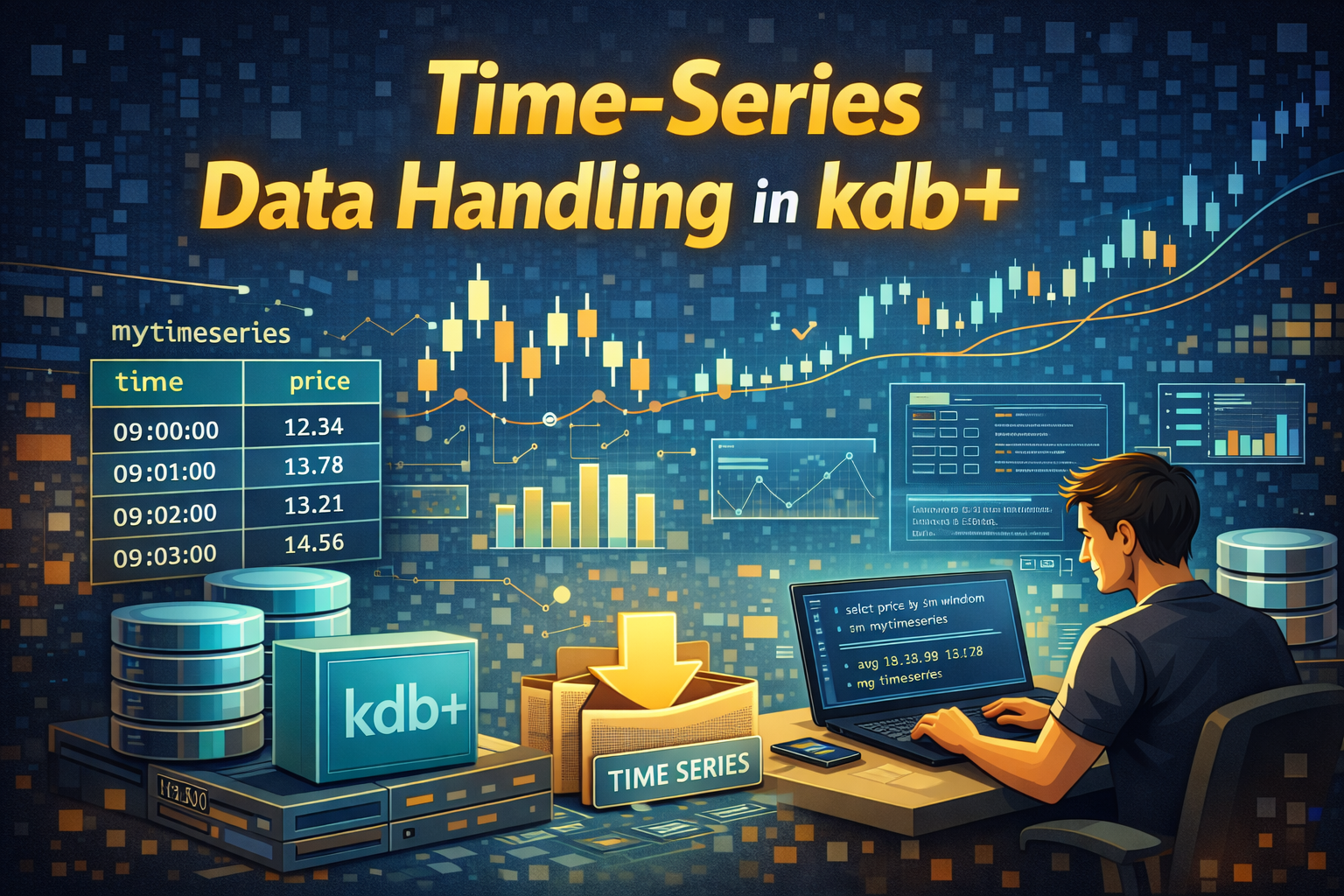
Time-series data is at the heart of high-frequency trading, financial analytics, IoT telemetry, and real-time monitoring systems. kdb+, powered by the expressive q language, is one of the fastest and most efficient time-series databases used in capital markets and data-intensive industries.
This training provides a comprehensive, hands-on understanding of how to ingest, store, query, and analyze large-scale time-series data using kdb+. Participants will learn best practices for designing time-series schemas, optimizing performance, managing historical and real-time data, and implementing efficient analytics workflows.
By the end of this course, learners will confidently build high-performance time-series solutions using kdb+ for real-world applications.
Prerequisites
- Basic understanding of databases and data structures
- Familiarity with command-line environments
- Basic programming knowledge
- Prior exposure to kdb+ & q
- Understanding of time-series concepts (timestamps, intervals, sampling) is beneficial
Table of Contents
Module 1: Introduction to Time-Series in kdb+
- What is Time-Series Data?
- Why kdb+ for Time-Series?
- Overview of kdb+ Architecture (RDB, HDB, IDB)
- Real-time vs Historical Data Handling
Module 2: Data Types & Temporal Structures
- Temporal Data Types in q (date, time, timestamp, timespan)
- Working with Nanosecond Precision
- Type Casting & Conversions
- Handling Time Zones
Module 3: Time-Series Table Design
- In-Memory vs On-Disk Tables
- Partitioned Databases
- Columnar Storage Model
- Primary Keys & Attributes (s, p, g)
- Schema Design Best Practices
Module 4: Data Ingestion Techniques
- Loading CSV and External Data Sources
- Real-Time Data Feeds
- Batch Processing
- Using
.u.updfor Real-Time Updates - Data Validation & Cleaning
Module 5: Querying Time-Series Data
- Basic Select Queries
- Filtering by Time Ranges
- Where Clauses & Conditional Queries
- Using
within,between - Performance-Optimized Queries
Module 6: Time-Based Aggregations
- Grouping by Time Buckets
xbarand Time Binning- Windowed Aggregations
- Moving Averages & Rolling Calculations
- VWAP & Financial Metrics
Module 7: As-Of Joins & Temporal Joins
- Understanding
aj,aj0 - Window Joins
- Handling Irregular Time-Series
- Trade & Quote (TAQ) Analysis
Module 8: Managing Historical Databases (HDB)
- Creating Partitioned HDB
- End-of-Day Processing
- Data Compaction
- Database Maintenance
- Querying Across Partitions
Module 9: Performance Optimization
- Applying Table Attributes
- Memory Management
- Query Profiling
- Scaling Strategies
- Multi-threading in kdb+
Module 10: Real-World Use Cases
- High-Frequency Trading Analytics
- Market Data Analysis
- IoT Sensor Monitoring
- Real-Time Dashboard Backend
Module 11: Hands-On Lab
- Build a Real-Time Time-Series Pipeline
- Create and Query an HDB
- Implement As-Of Joins
- Optimize a Large Dataset Query
- Mini Project: Financial Tick Data Analysis


Reviews
There are no reviews yet.