


Description
Introduction
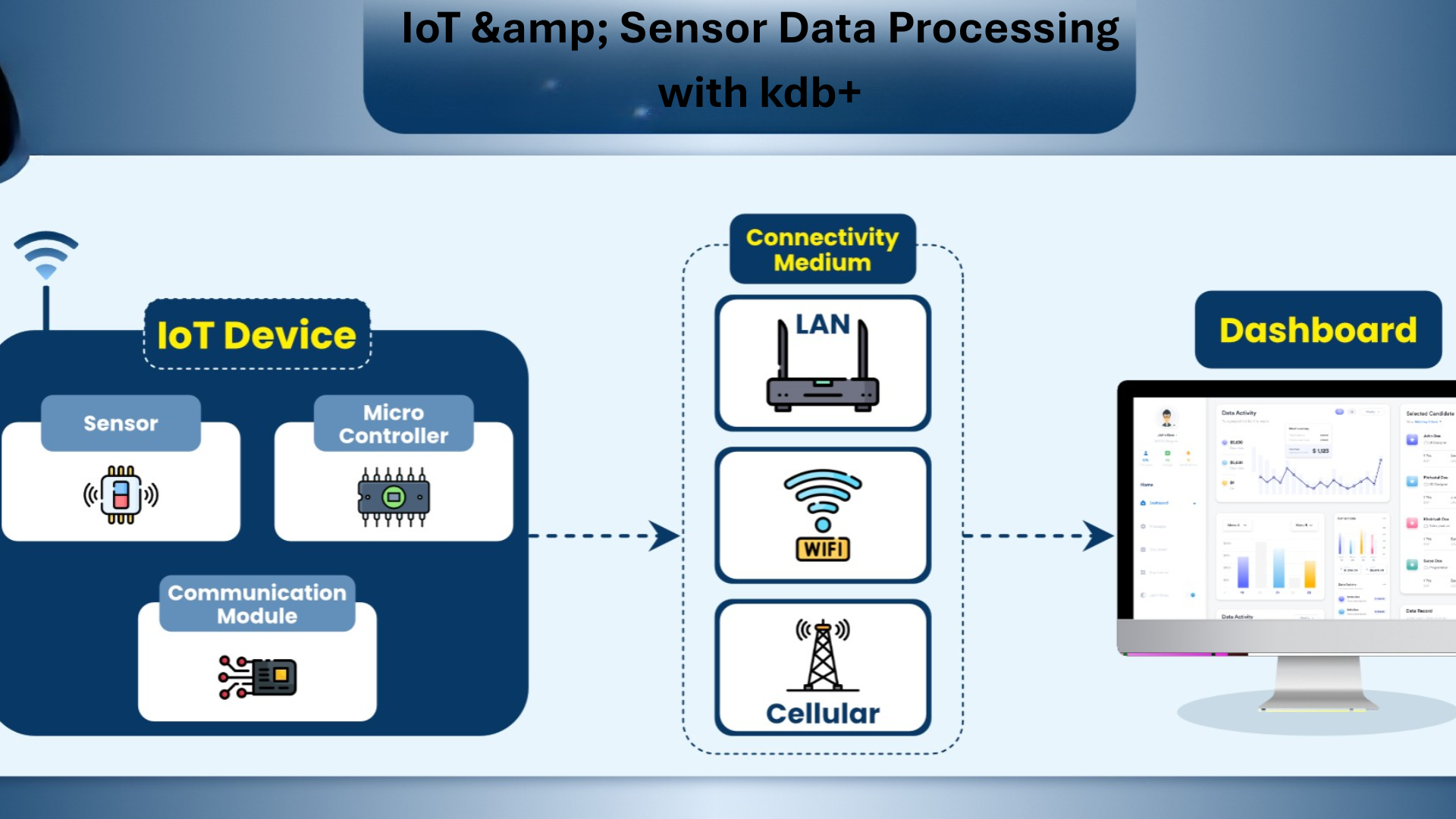
The Internet of Things (IoT) is transforming industries by enabling devices to collect, transmit, and process data in real-time. Efficient management and analysis of this high-frequency sensor data is crucial for actionable insights. kdb+, with its ultra-fast time-series database and q programming language, is ideal for handling large-scale IoT data streams, performing real-time analytics, and supporting predictive maintenance, anomaly detection, and monitoring systems.
This training equips participants with the skills to ingest, process, and analyze IoT sensor data using kdb+, bridging the gap between raw device data and meaningful business insights.
Prerequisites:
- Basic understanding of IoT concepts and sensor networks.
- Familiarity with databases and time-series data concepts.
- Basic programming knowledge in q or willingness to learn q during the course.
- Understanding of data formats such as CSV, JSON, or MQTT streams.
- Optional: Knowledge of Python or R for extended integration with kdb+.
Table of Contents:
Module 1: Introduction to IoT & Sensor Data
- Overview of IoT ecosystems and sensor networks
- Types of sensors and data generation patterns
- Challenges in managing IoT data
Module 2: Fundamentals of kdb+ for IoT
- kdb+ architecture and time-series data handling
- Introduction to q programming for IoT data
- Data types and structures suitable for sensor data
Module 3: Data Ingestion Techniques
- Real-time data ingestion from MQTT, REST APIs, and CSV/JSON streams
- Batch vs. streaming ingestion
- Data validation and cleaning
Module 4: Storing and Managing Sensor Data
- Creating tables for high-frequency IoT data
- Partitioning strategies for time-series sensor data
- Memory vs. disk storage optimization
Module 5: Real-Time Data Processing & Analytics
- Aggregations, windowed queries, and streaming calculations
- Detecting anomalies and events in sensor data
- Combining multiple sensor streams for insights
Module 6: Integration & Visualization
- Connecting kdb+ with Python/R for advanced analysis
- Visualizing IoT data using dashboards and charts
- Setting up alerts and notifications from processed data
Module 7: Performance Optimization & Best Practices
- Query optimization for large-scale sensor data
- Efficient data storage and retrieval techniques
- Handling massive streams with minimal latency
Module 8: Hands-On Project
- End-to-end project: Collecting, storing, analyzing, and visualizing sensor data
- Real-world use cases: predictive maintenance, environmental monitoring, smart devices

Reviews
There are no reviews yet.