


Description
Introduction
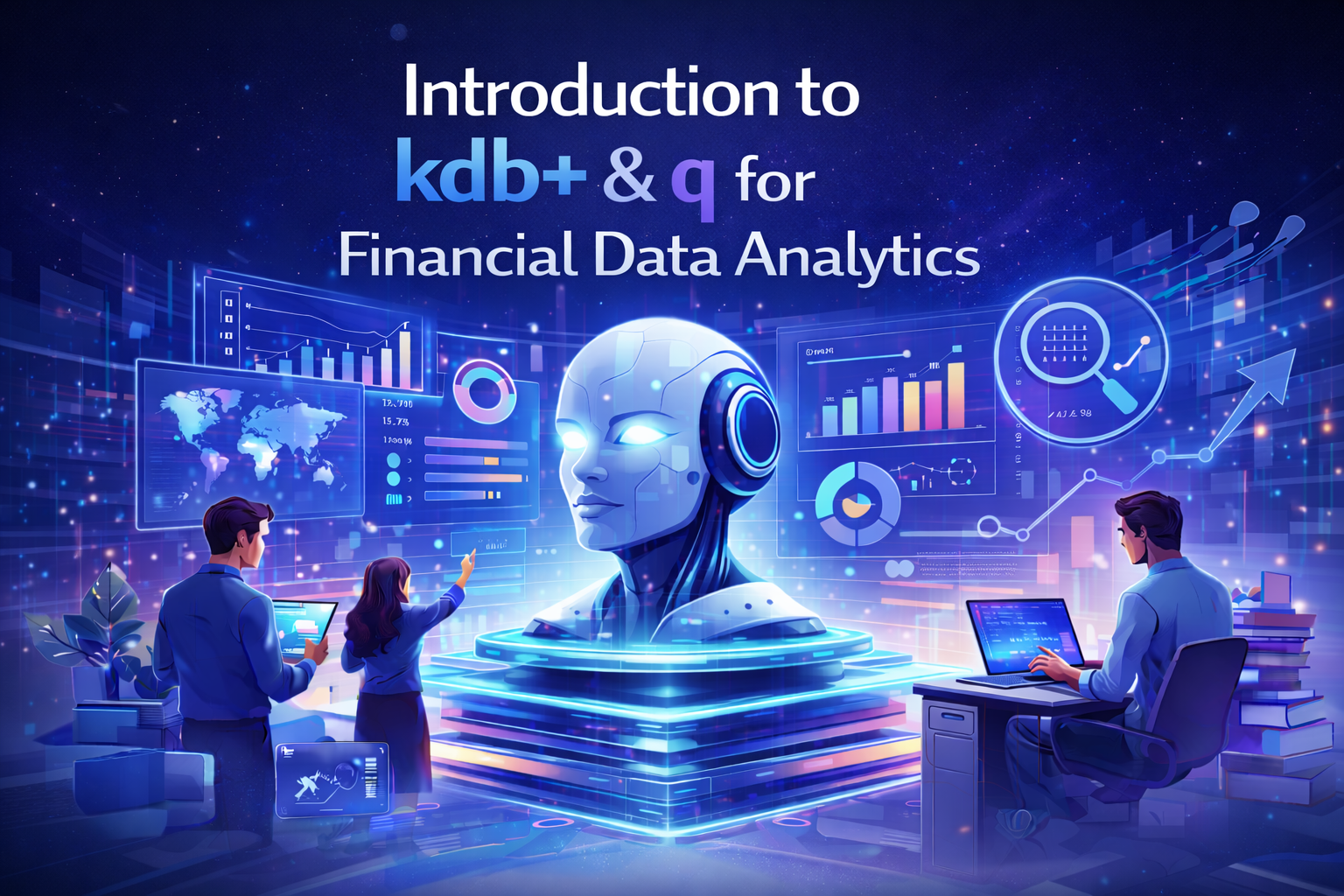
This training provides a comprehensive foundation in kdb+ and the q programming language, purpose-built for high-performance time-series and financial data analytics. Developed by KX, kdb+ is widely adopted across global investment banks, hedge funds, exchanges, and fintech firms for handling massive volumes of tick, trade, and market data with ultra-low latency.
Prerequisites
- Basic understanding of financial markets (trades, quotes, order books, OHLC, etc.)
- Familiarity with databases (SQL knowledge is helpful but not mandatory)
- Basic programming knowledge (Python, R, Java, or similar)
- Understanding of time-series data concepts (recommended but not required)
Table of Contents
Module 1: Overview of kdb+ & q
- Introduction to kdb+ Ecosystem
- Why kdb+ in Financial Services?
- Architecture of kdb+ (In-Memory & On-Disk)
- Overview of q Language
- Installing and Setting Up kdb+
Module 2: Fundamentals of q Programming
- Data Types in q
- Lists, Dictionaries, and Tables
- Functional Programming Concepts in q
- Writing and Executing q Scripts
- Querying Data with q-SQL
Module 3: Working with Financial Time-Series Data
- Time-Series Data Structures
- Tick Data vs Bar Data
- Creating and Managing Partitioned Databases
- Handling Timestamps and Temporal Data
- Aggregations and Windowed Calculations
Module 4: Querying and Analytics in q
- Select, Update, Delete Queries
- Grouped Aggregations
- As-Of Joins (aj) for Market Data
- Window Functions for Trading Analytics
- VWAP, TWAP, and OHLC Calculations
Module 5: Real-Time Data Processing
- Streaming Data Concepts
- Publish-Subscribe Model in kdb+
- Real-Time Tick Capture
- Building a Simple Real-Time Analytics Engine
- Intraday Monitoring Dashboards
Module 6: Performance Optimization
- Memory Management in kdb+
- Columnar Storage Benefits
- Indexing and Partitioning Strategies
- Query Optimization Techniques
- Scaling kdb+ for Enterprise Environments
Module 7: Financial Use Cases & Mini Project
- Trade & Quote Analytics
- Order Book Analysis
- Risk & Exposure Monitoring
- Market Surveillance Concepts
- Mini Project: Build a Historical Tick Analytics Engine
Reviews
There are no reviews yet.