


Description
Introduction
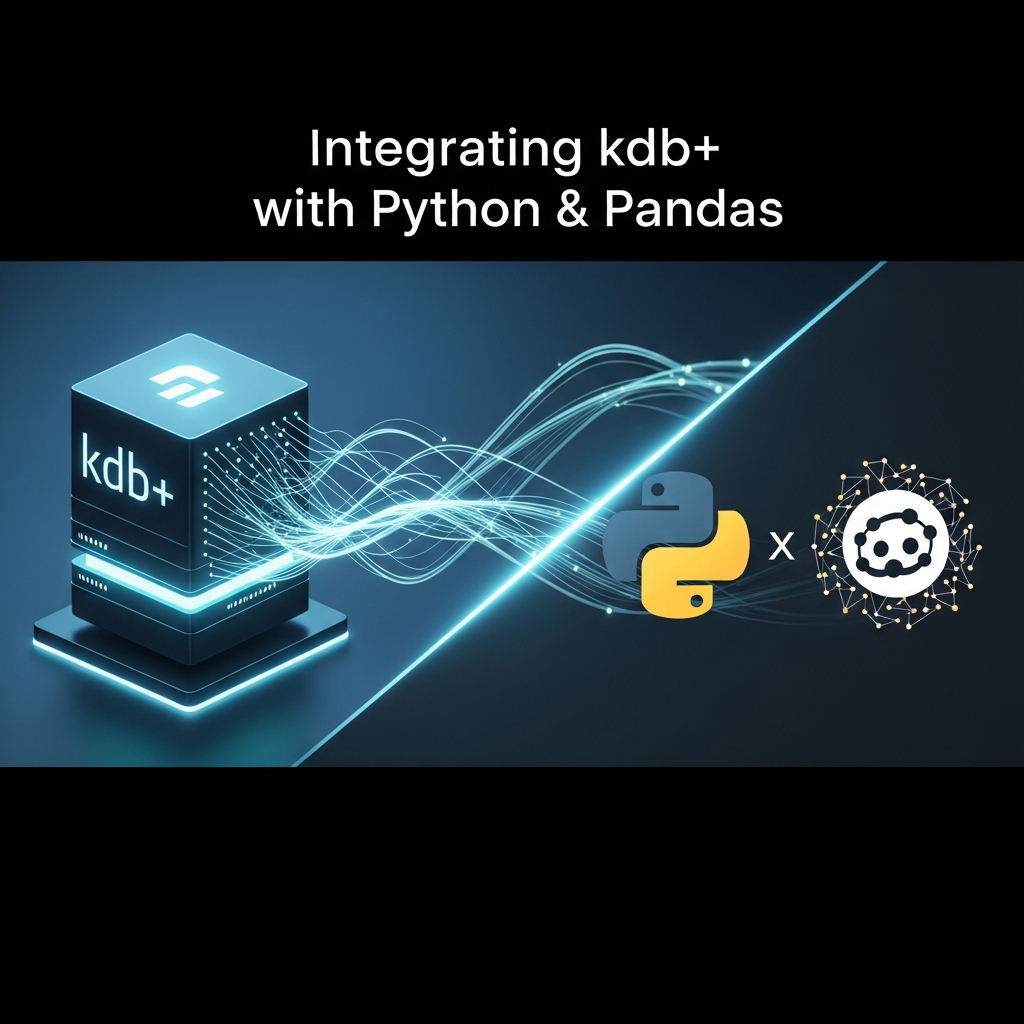
Modern data analytics workflows often combine the ultra-fast, time-series capabilities of kdb+ with the rich data science ecosystem of Python and Pandas. This training provides a comprehensive guide to integrating kdb+ with Python, enabling seamless data exchange, real-time analytics, and advanced modeling workflows.
Participants will learn how to connect Python applications to kdb+, retrieve and manipulate time-series data, convert between q and Pandas data structures, and build hybrid analytics pipelines that leverage the strengths of both platforms.
This course is ideal for financial data analysts, quantitative developers, data engineers, and Python developers working with high-frequency or large-scale time-series datasets.
Prerequisites
- Basic understanding of kdb+ architecture
- Working knowledge of q language fundamentals
- Familiarity with Python programming
- Basic experience with Pandas DataFrames
- Understanding of time-series data concepts (helpful but not mandatory)
Table of Contents
Module 1: Overview of kdb+–Python Integration
- Why integrate kdb+ with Python?
- Use cases in finance, IoT, and real-time analytics
- Architecture overview: kdb+ process & Python client
- IPC fundamentals for integration
Module 2: Setting Up the Environment
- Installing Python dependencies (qpython / PyKX)
- Configuring kdb+ for external connections
- Understanding ports, authentication & security basics
- Testing connectivity between Python and kdb+
Module 3: Connecting Python to kdb+
- Using PyKX for integration
- Establishing synchronous and asynchronous connections
- Executing q queries from Python
- Error handling and connection management
Module 4: Data Type Mapping Between q and Python
- q data types vs Python data types
- Temporal types (date, time, timestamp)
- Symbol and string handling
- Null values and missing data
- Type conversion best practices
Module 5: Working with Pandas DataFrames
- Converting q tables to Pandas DataFrames
- Converting Pandas DataFrames to q tables
- Handling indexed time-series data
- Performance considerations during conversion
Module 6: Querying kdb+ from Python
- Sending parameterized queries
- Passing arguments safely
- Server-side vs client-side computations
- Retrieving large datasets efficiently
Module 7: Real-Time Data & Streaming Integration
- Subscribing to kdb+ tickerplant from Python
- Handling streaming updates
- Processing real-time data in Pandas
- Building live dashboards & analytics pipelines
Module 8: Performance Optimization
- Minimizing data transfer overhead
- Vectorized operations in q vs Pandas
- Memory management considerations
- Benchmarking hybrid workflows
Module 9: Advanced Integration Patterns
- Embedding Python inside kdb+ (PyKX advanced usage)
- Calling Python ML models from kdb+
- Batch processing vs real-time integration
- Scalable deployment strategies
Module 10: Production & Deployment Considerations
- Authentication & secure IPC
- Logging and monitoring
- Error handling strategies
- Best practices for enterprise environments


Reviews
There are no reviews yet.