


Description
- Certification Name: Microsoft Certified: Dynamics 365 Finance and Operations Apps Developer Associate
- Exam Code: MB-500
- Focus Areas:
- X++ programming
- Customization & extensions
- Integrations
- Reporting (SSRS)
Introduction
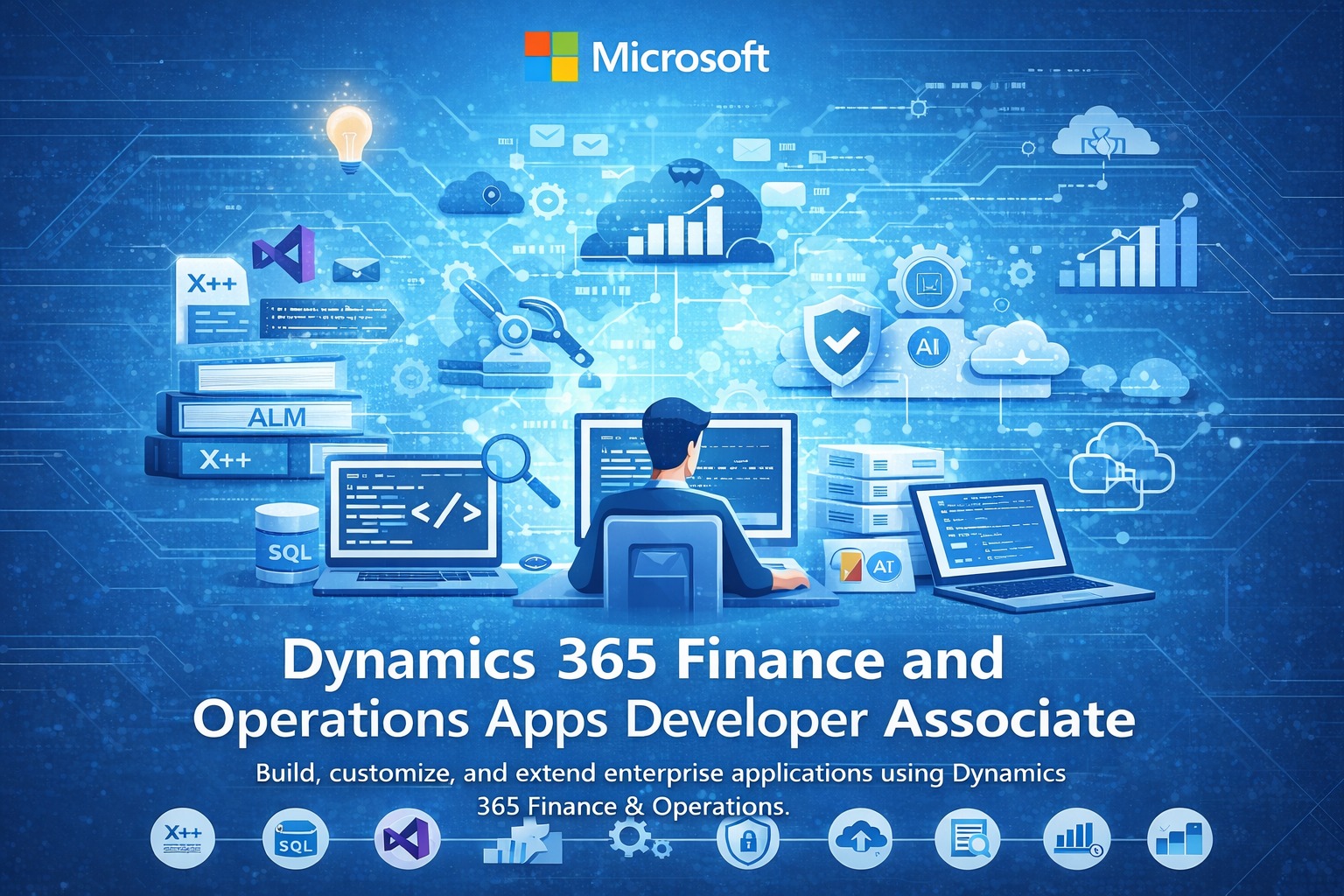
Microsoft Dynamics 365 Finance and Operations Apps Developer Associate focuses on building, customizing, and extending enterprise applications using Dynamics 365 Finance & Operations (D365 F&O). This training covers development concepts such as X++, Visual Studio integration, data modeling, business logic implementation, integrations, and performance optimization. It enables developers to create scalable, secure, and efficient ERP solutions aligned with business needs.
Learner Prerequisites
- Basic understanding of ERP concepts and business processes
- Knowledge of object-oriented programming (preferably C#, Java, or similar)
- Familiarity with databases and SQL concepts
- Understanding of Microsoft Azure fundamentals is an advantage
- Basic knowledge of Visual Studio and development environments
- Analytical and problem-solving skills
Table of Contents
1. Introduction to Dynamics 365 Finance & Operations Development
1.1 Overview of D365 F&O Architecture
1.2 Development Environment Setup (Visual Studio & Lifecycle Services)
1.3 Understanding AOT (Application Object Tree)
1.4 Models, Packages, and Metadata
1.5 Application Lifecycle Management (ALM) Overview
2. X++ Programming Fundamentals
2.1 Introduction to X++ Language
2.2 Data Types, Variables, and Operators
2.3 Control Statements and Loops
2.4 Classes, Methods, and Object-Oriented Concepts
2.5 Exception Handling in X++
3. Data Management and Modeling
3.1 Tables, Fields, and Extended Data Types
3.2 Indexes and Relations
3.3 Data Entities and Data Management Framework (DMF)
3.4 Views and Queries
3.5 Temporary Tables and In-Memory Processing
4. User Interface Development
4.1 Forms and Form Patterns
4.2 Controls and Design Principles
4.3 Menu Items and Navigation
4.4 Personalization and Customization
4.5 Workspace Development
5. Business Logic Implementation
5.1 Table Methods and Validation
5.2 Classes and Business Logic Layer
5.3 Event Handlers and Delegates
5.4 Chain of Command (CoC) Extensions
5.5 Batch Jobs and Processing
6. Security and Role-Based Access
6.1 Security Architecture in D365 F&O
6.2 Roles, Duties, and Privileges
6.3 Security Policies and Data Security
6.4 Extensible Data Security (XDS)
6.5 Best Practices for Secure Development
7. Integration and Services
7.1 Integration Concepts and Patterns
7.2 OData Services and Custom Services
7.3 REST APIs and External Integrations
7.4 Business Events and Messaging
7.5 Power Platform Integration
8. Reporting and Analytics
8.1 Introduction to SSRS Reports
8.2 Creating and Customizing Reports
8.3 Data Providers and Report Design
8.4 Financial Reporting Basics
8.5 Power BI Integration
9. Testing and Debugging
9.1 Debugging Techniques in Visual Studio
9.2 Unit Testing and Test Framework
9.3 Performance Testing
9.4 Code Validation and Best Practices
9.5 Troubleshooting Common Issues
10. Deployment and Lifecycle Management
10.1 Build and Deployment Process
10.2 Working with Lifecycle Services (LCS)
10.3 Version Control and Branching Strategy
10.4 Environment Management
10.5 Continuous Integration and Continuous Deployment (CI/CD)
11. Performance Optimization and Best Practices
11.1 Code Optimization Techniques
11.2 SQL Performance Tuning
11.3 Caching Mechanisms
11.4 Best Practices for Development
11.5 Monitoring and Diagnostics
12. Advanced Development Concepts
12.1 Extensions vs Overlayering
12.2 Metadata-Driven Development
12.3 Advanced Frameworks in D365
12.4 Custom Workflows
12.5 Artificial Intelligence and Automation Integration
13. Real-Time Projects and Case Studies
13.1 End-to-End Customization Project
13.2 Integration Use Case Implementation
13.3 Reporting Use Case
13.4 Performance Optimization Case Study
13.5 Industry-Specific Scenarios
Conclusion
This training equips learners with the technical expertise required to design, develop, and extend Microsoft Dynamics 365 Finance and Operations applications. By mastering X++, integrations, security, and deployment strategies, developers will be prepared to build robust enterprise-grade solutions and successfully achieve the certification.


Reviews
There are no reviews yet.