


Description
Introduction
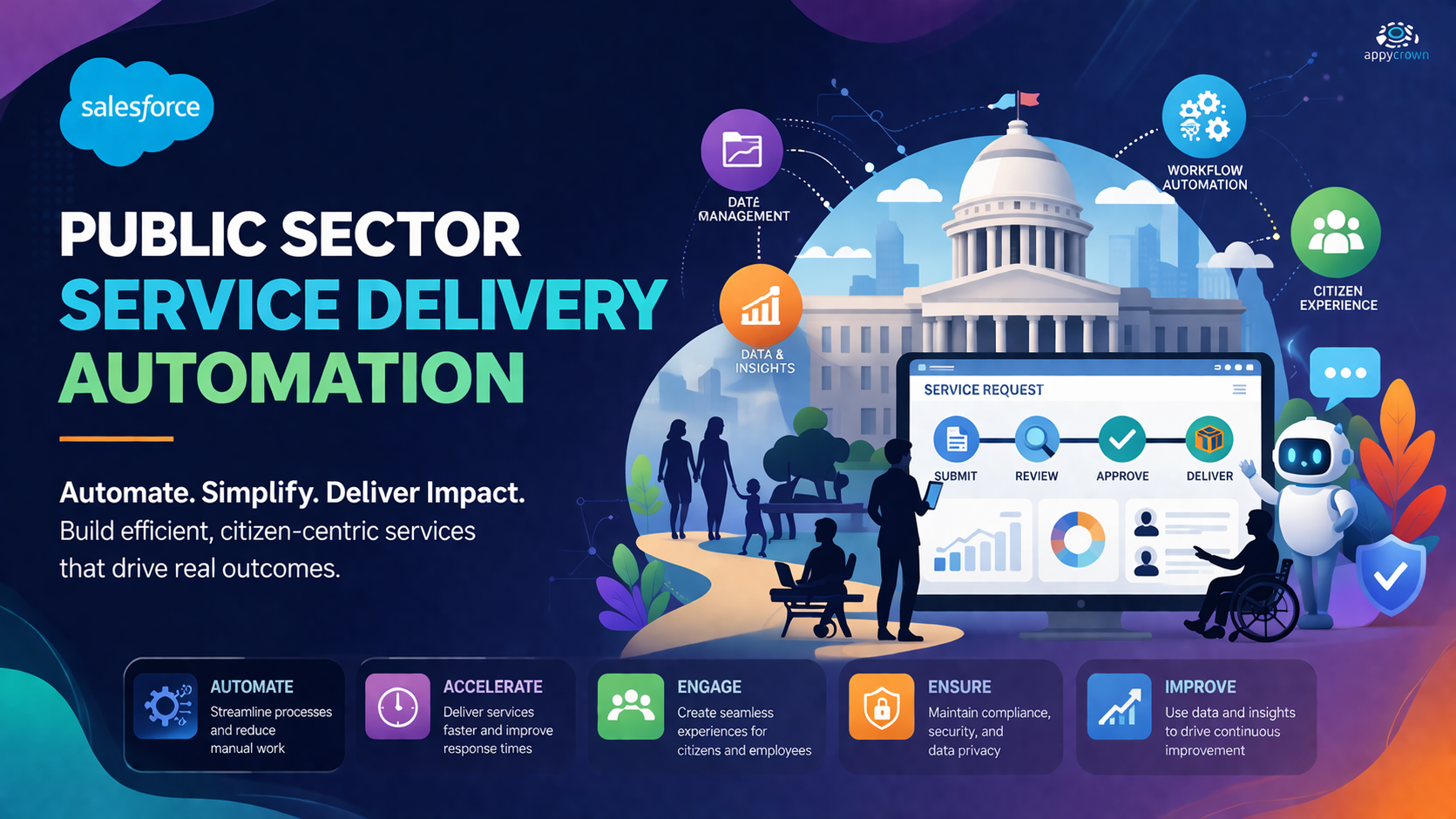
Salesforce Public Sector Service Delivery Automation enables government and public sector agencies to streamline service delivery processes, automate case and workflow management, and improve citizen engagement. It supports regulatory compliance, efficient service routing, and transparency in operations.
Learner Prerequisites
- Basic understanding of Salesforce CRM.
- Familiarity with public sector workflows and citizen service processes.
- Knowledge of case management, service automation, and workflow configuration.
Table of Contents
1. Introduction to Public Sector Service Delivery Automation
1.1 Overview of Service Delivery Automation
1.2 Key Features and Benefits
1.3 Public Sector Challenges and Automation Opportunities
2. Case Management for Public Services
2.1 Creating and Logging Service Requests
2.2 Assignment Rules and Routing
2.3 Queues and Service Ownership
2.4 Escalation and SLA Management
2.5 Auto-Response Rules and Notifications
3. Workflow and Process Automation
3.1 Understanding Workflow Rules and Approvals
3.2 Process Builder Overview
3.3 Flow Automation for Service Requests
3.4 Scheduling and Time-Based Automation
3.5 Automation Best Practices for Public Sector
4. Omni-Channel Service Routing
4.1 Configuring Omni-Channel for Citizens
4.2 Presence Statuses and Agent Workload Management
4.3 Priority-Based Routing Rules
4.4 Multi-Channel Service Integration
4.5 Monitoring Service Requests in Real-Time
5. Knowledge Management and Collaboration
5.1 Integrating Knowledge Base for Service Resolution
5.2 Using Knowledge Articles Effectively
5.3 Case Collaboration Tools for Teams
5.4 Enhancing Citizen Engagement through Knowledge
6. Analytics and Reporting
6.1 Standard Reports for Service Metrics
6.2 Custom Dashboards for Service Monitoring
6.3 SLA Tracking and KPI Analysis
6.4 Performance Insights for Continuous Improvement
7. AI and Automation Enhancements
7.1 Einstein AI for Predictive Service Delivery
7.2 AI-Powered Recommendations and Insights
7.3 Chatbots for Citizen Self-Service
7.4 Automating Routine Tasks to Improve Efficiency
8. Integration and Advanced Features
8.1 Integration with Public Sector Applications
8.2 Field Service Lightning Overview
8.3 Mobile Access for Remote Service Management
8.4 Third-Party Application Integrations
9. Governance and Security
9.1 Data Privacy and Security Best Practices
9.2 Change Management for Public Sector Workflows
9.3 Compliance and Regulatory Considerations
9.4 Continuous Improvement and Operational Excellence
Conclusion
Mastering Salesforce Public Sector Service Delivery Automation equips agencies to automate workflows, enhance citizen services, and ensure operational efficiency while maintaining compliance and transparency.


Reviews
There are no reviews yet.