


Description
Introduction
Google BigQuery is a fully managed and serverless data warehouse. It is designed for large-scale analytics.It allows organizations to run fast SQL queries on massive datasets. In addition, it removes the need to manage infrastructure. Moreover, it offers built-in scalability and real-time analytics capabilities.Another key feature is the separation of storage and compute. Because of this design, performance remains consistent even with large workloads. Therefore, BigQuery is widely used in data engineering and business intelligence.
It also includes advanced features such as partitioning, clustering, and caching. These features help improve query performance. As a result, users can reduce cost and execute complex queries more efficiently.
Learner Prerequisites
- Basic understanding of SQL (SELECT, JOIN, GROUP BY)
- Familiarity with relational database concepts
- Awareness of cloud computing fundamentals
- Understanding of datasets, tables, and data types
- Basic knowledge of data warehousing concepts
Table of Contents
1. Partitioning in Google BigQuery
1.1 Introduction to partitioned tables
1.2 Types of partitioning (time-based, ingestion-based, integer-based)
1.3 Partition pruning and query optimization
1.4 Cost reduction using partition filters
1.5 Best practices for partition design
2. Clustering in Google BigQuery
2.1 Concept of clustering in BigQuery tables
2.2 Choosing optimal clustering columns
2.3 Difference between partitioning and clustering
2.4 Performance impact of clustered data
2.5 Multi-column clustering strategies
3. Performance Optimization in Google BigQuery
3.1 Query optimization techniques (SELECT, WHERE, LIMIT usage)
3.2 Reducing data scanned for cost efficiency
3.3 Using materialized views and caching
3.4 Optimizing joins and aggregations
3.5 Analyzing query execution using job statistics
4. Advanced Optimization Strategies in Google BigQuery
4.1 Designing efficient data models for performance
4.2 Avoiding common performance bottlenecks
4.3 Using denormalization for faster queries
4.4 Handling large-scale analytical workloads
4.5 Cost-performance trade-off techniques
Conclusion
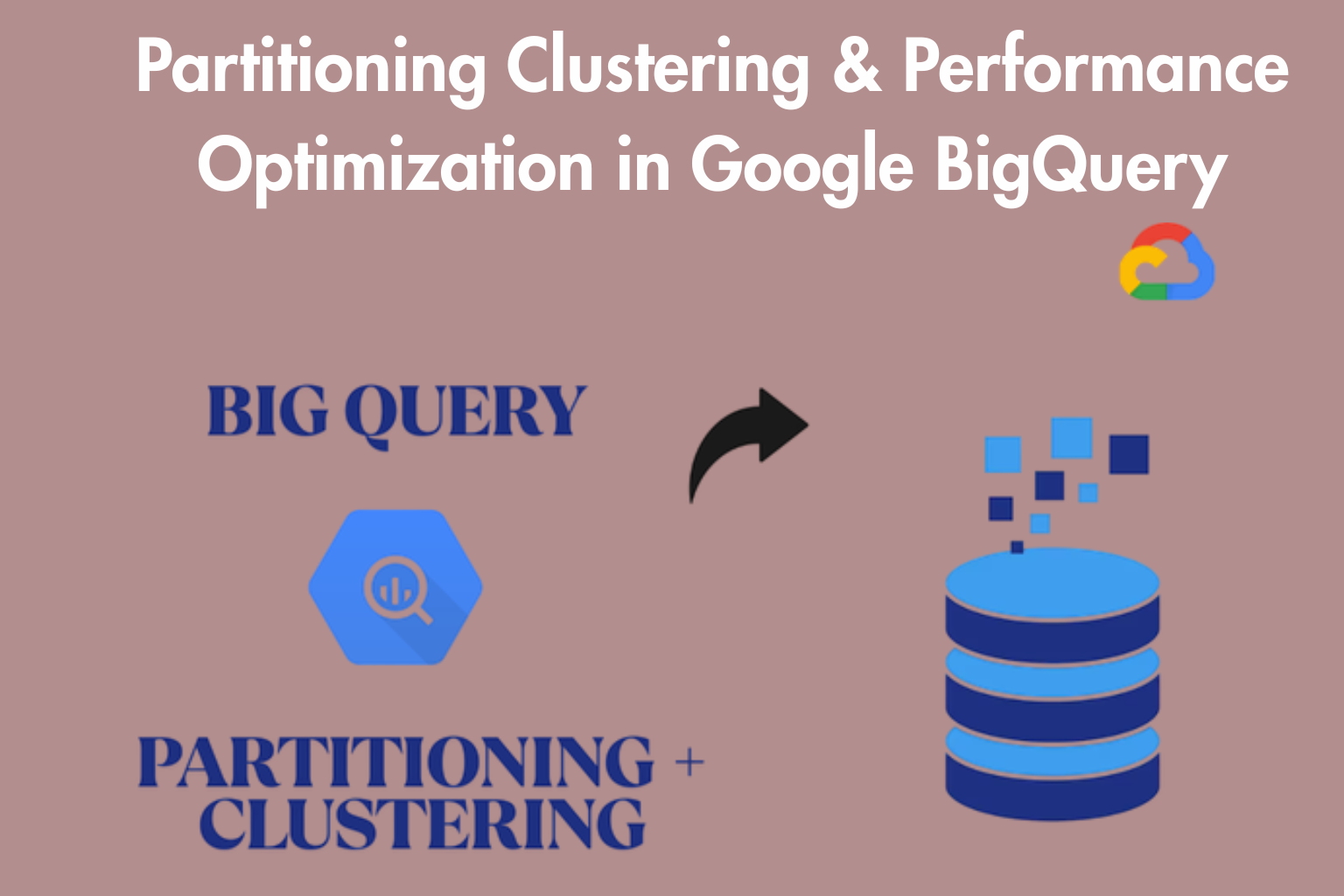
This training focuses on improving performance in Google BigQuery through practical techniques. It covers partitioning, clustering, and query optimization.In addition, learners understand how to reduce data processing costs. They also learn how to handle large datasets efficiently. Moreover, the course explains strategies for balancing cost and performance.
As a result, participants can design faster and more efficient queries. Therefore, they will be able to support scalable analytics for enterprise workloads.


Reviews
There are no reviews yet.