


Description
Introduction
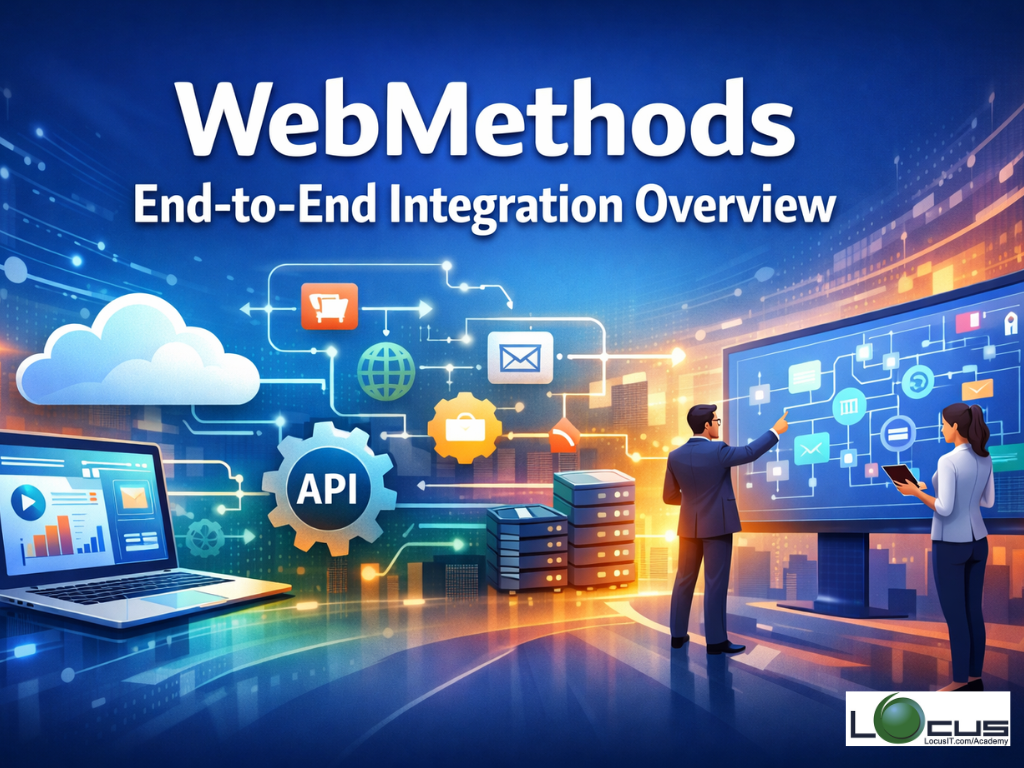
The WebMethods End-to-End Integration Overview training provides a comprehensive understanding of how the WebMethods platform enables seamless integration across diverse enterprise systems. This course walks learners through the complete integration lifecycle—from source systems and messaging to orchestration, transformation, monitoring, and governance.
Participants will gain a holistic view of how different WebMethods components work together to deliver reliable, scalable, and secure integrations, preparing them to design, implement, and support real-world integration solutions.
Prerequisites
- Basic understanding of enterprise application concepts
- Familiarity with SOA, APIs, or middleware (helpful but not mandatory)
- Basic knowledge of XML, JSON, and web services
- Understanding of business processes and data flow concepts
- No prior WebMethods experience required (beginner-friendly)
Table of Contents
Module 1: Introduction to Enterprise Integration
- What is Enterprise Integration?
- Common integration challenges in enterprises
- Point-to-point vs centralized integration
- Role of WebMethods in digital transformation
Module 2: WebMethods Platform Overview
- WebMethods product suite and capabilities
- Key components and architecture overview
- Integration styles supported by WebMethods
- Typical enterprise integration scenarios
Module 3: End-to-End Integration Architecture
- Source and target systems
- Integration patterns and flows
- Synchronous vs asynchronous processing
- Message-driven architecture concepts
Module 4: Integration Server Fundamentals
- Role of Integration Server in E2E integration
- Services, packages, and adapters
- Flow services and orchestration basics
- Error handling and retry mechanisms
Module 5: Messaging and Event-Driven Integration
- Introduction to WebMethods messaging
- Publish/Subscribe model
- Guaranteed delivery and reliability
- Event-driven integration use cases
Module 6: Data Transformation and Mapping
- Data formats used in WebMethods
- Schema definitions and document types
- Basic mapping and transformation concepts
- Handling validations and data enrichment
Module 7: API-Led and Service-Based Integration
- Introduction to APIs in WebMethods
- REST and SOAP services overview
- API lifecycle basics
- API-led connectivity concepts
Module 8: Business Process Integration
- Introduction to process orchestration
- Long-running vs short-running processes
- Exception handling in business processes
- End-to-end business workflow visibility
Module 9: Monitoring, Logging, and Troubleshooting
- End-to-end integration monitoring
- Logging and tracking integration flows
- Error identification and resolution
- Performance monitoring overview
Module 10: Security and Governance
- Security concepts in WebMethods
- Authentication and authorization
- Data security and compliance basics
- Governance and best practices
Module 11: Deployment and Environment Management
- Integration environments (DEV, TEST, PROD)
- Packaging and deployment concepts
- Configuration and version control overview
- Environment-specific considerations
Module 12: End-to-End Integration Use Case Walkthrough
- Real-world integration scenario
- Step-by-step E2E flow explanation
- Best practices and design considerations
- Common pitfalls and lessons learned
Module 13: Summary and Next Steps
- Key takeaways from the course
- WebMethods learning and certification paths
- Recommended advanced WebMethods trainings
- Career roles aligned with WebMethods integration
Reviews
There are no reviews yet.