


Description
Introduction
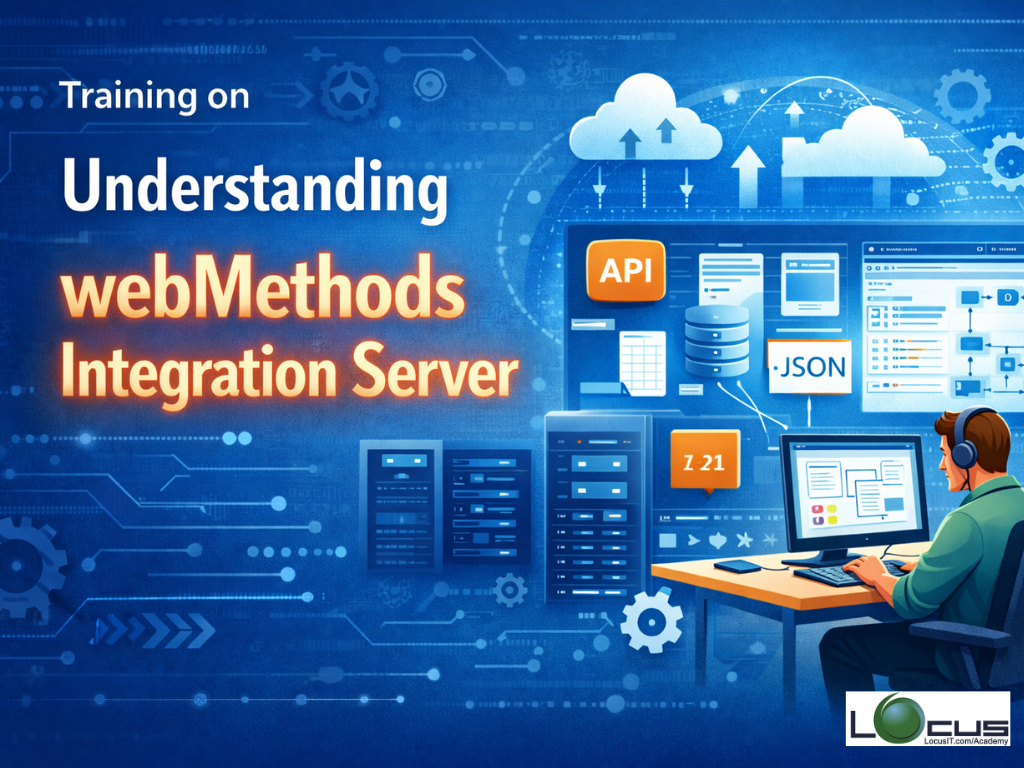
The webMethods Integration Server (IS) is the core runtime engine of the webMethods Integration Platform. It enables organizations to build, run, monitor, and manage integrations across applications, services, APIs, and B2B partners.
This training provides a comprehensive understanding of Integration Server architecture, components, and runtime behavior. Participants will learn how Integration Server processes requests, executes services, manages transactions, and integrates with databases, messaging systems, and external applications.
By the end of this course, learners will be able to confidently navigate Integration Server, understand its internal workings, and support integration solutions in real-world enterprise environments.
Prerequisites
-
Basic understanding of:
- Enterprise application integration concepts
- Web services (REST/SOAP)
- XML, JSON, and basic data formats
-
Familiarity with:
- webMethods Designer (recommended but not mandatory)
- Client–server architecture
-
Basic knowledge of:
- Databases and SQL
- Networking concepts (HTTP, ports, protocols)
-
No prior Integration Server administration experience required
Table of Contents
Module 1: Overview of webMethods Integration Server
- What is Integration Server?
- Role of Integration Server in webMethods Suite
- Key use cases and business benefits
- Integration Server vs other middleware components
Module 2: Integration Server Architecture
- High-level architecture overview
- Core components of Integration Server
- Runtime environment and execution model
- Interaction with webMethods Designer and Admin Console
Module 3: Integration Server Core Components
- Packages and namespaces
- Services: Flow, Java, Adapter, and Web services
- Folders and service organization
- Built-in services overview
Module 4: Service Execution & Flow Processing
- Flow service execution lifecycle
- Pipeline concepts and data handling
- Branching, looping, and error handling
- Debugging and tracing services
Module 5: Communication Protocols & Connectivity
- HTTP/HTTPS listeners and ports
- REST and SOAP service handling
- Messaging concepts (JMS overview)
- Integration with external systems
Module 6: Adapter Framework Overview
- Introduction to webMethods Adapters
- Adapter architecture and components
- Adapter connections and services
- Common adapter use cases
Module 7: Transaction Management
- Local and distributed transactions
- Transaction boundaries and scopes
- Error handling and rollback scenarios
- Reliable messaging basics
Module 8: Security in Integration Server
- User authentication and authorization
- Access control lists (ACLs)
- Certificates and keystores
- Securing services and ports
Module 9: Monitoring & Administration
- webMethods Integration Server Admin Console
- Service monitoring and logging
- Managing packages and services
- Threading, memory, and performance basics
Module 10: Error Handling & Troubleshooting
- Common runtime errors
- Exception handling best practices
- Logs and audit trails
- Troubleshooting techniques
Module 11: Integration Server in Real-World Scenarios
- Typical enterprise integration patterns
- Synchronous vs asynchronous integrations
- Best practices for scalable solutions
- Common implementation pitfalls
Module 12: Summary & Next Steps
- Key takeaways
- Best practices recap
- Recommended advanced webMethods trainings
- Career paths with webMethods Integration Server

Reviews
There are no reviews yet.