


Description
Introduction
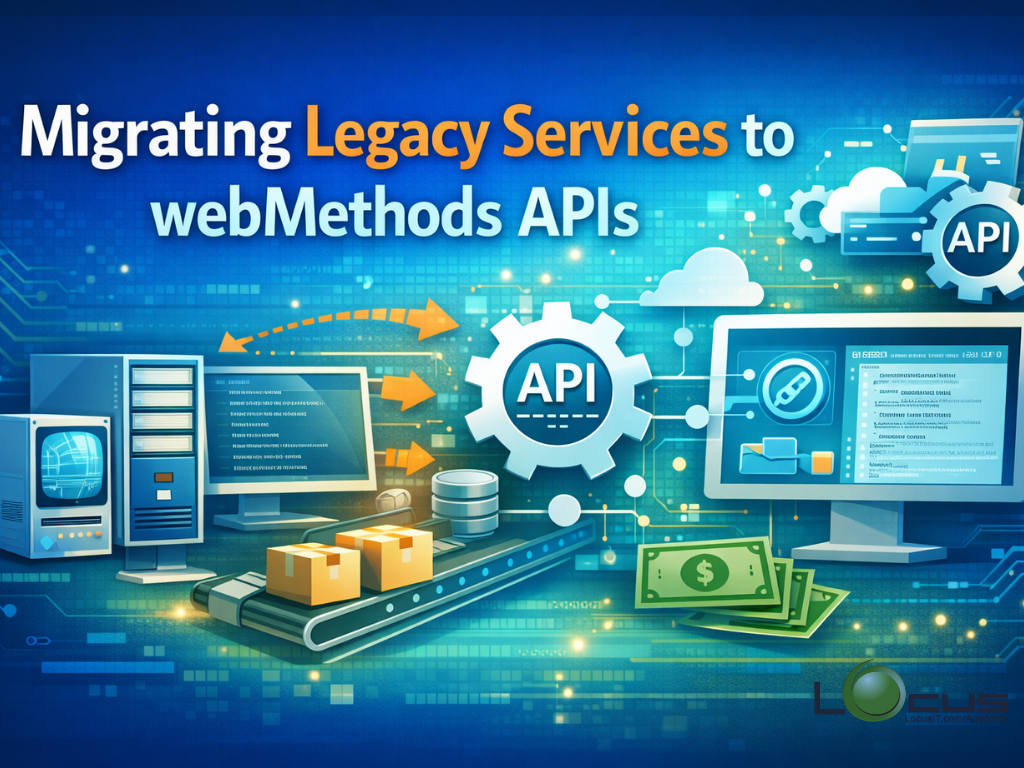
Organizations running on legacy systems often struggle with scalability, agility, and integration with modern digital platforms. This training focuses on migrating legacy services (SOAP, flat-file, mainframe, monolithic applications, etc.) into modern, reusable WebMethods APIs.
Participants will learn how to analyze existing legacy services, design API-led integration architectures, and implement secure, scalable REST/SOAP APIs using WebMethods Integration Server, Designer, and API Gateway. The course emphasizes best practices, migration strategies, and real-world scenarios to ensure minimal disruption and maximum business value.
Prerequisites
- Basic understanding of WebMethods Integration Server & Designer
- Knowledge of Flow services and basic Java services
- Familiarity with SOAP and REST concepts
- Basic understanding of enterprise integration and messaging
- Exposure to legacy systems (mainframe, flat files, databases, monolithic apps) is a plus
- Understanding of JSON, XML, and data mapping concepts
Table of Contents
Module 1: Understanding Legacy Systems & Migration Challenges
- What are legacy services?
- Common legacy architectures and technologies
- Key challenges in legacy modernization
- Business drivers for API-based migration
- Migration risks and mitigation strategies
Module 2: WebMethods as an API Modernization Platform
- WebMethods integration landscape overview
- Role of Integration Server, Designer, and API Gateway
- API-led connectivity using WebMethods
- Choosing REST vs SOAP for migrated services
Module 3: Legacy Service Assessment & Migration Strategy
- Analyzing existing legacy services
- Identifying reusable business logic
- Migration approaches: wrap, refactor, re-engineer, replace
- Defining API boundaries and contracts
- Designing backward compatibility strategies
Module 4: Designing APIs for Legacy Services
- API design best practices
- Defining REST resources and operations
- Data model transformation (legacy to API-friendly formats)
- Versioning strategies for migrated APIs
- Error handling and response standardization
Module 5: Implementing Legacy Wrappers in WebMethods
- Exposing legacy services via WebMethods Flow services
- Wrapping existing SOAP services
- Integrating databases, flat files, and adapters
- Data mapping and transformation techniques
- Handling synchronous vs asynchronous interactions
Module 6: Securing Migrated APIs
- Authentication and authorization basics
- Implementing security with WebMethods API Gateway
- OAuth, API keys, and token-based security
- Securing legacy backends
- Rate limiting and traffic control
Module 7: Testing, Validation & Error Handling
- Unit testing migrated APIs
- Mocking legacy systems
- Exception handling and fault mapping
- Logging and monitoring best practices
- Ensuring data integrity during migration
Module 8: Deployment, Performance & Optimization
- Deploying migrated services in different environments
- Performance considerations for legacy integrations
- Caching and throttling strategies
- Load handling and scalability planning
- Migration performance tuning tips
Module 9: Governance & Lifecycle Management
- API governance for migrated services
- Managing API versions and deprecations
- Documentation and API consumer onboarding
- Monitoring usage and analytics
- Managing change without breaking consumers
Module 10: Real-World Migration Use Cases
- Legacy SOAP to REST API migration
- Mainframe or batch service exposure
- Database-driven legacy services modernization
- Common pitfalls and lessons learned
- Migration best practices checklist
Module 11: Migration Roadmap & Best Practices
- Creating a step-by-step migration roadmap
- Incremental vs big-bang migration
- Co-existence of legacy and modern APIs
- Future-proofing APIs for cloud and microservices
Reviews
There are no reviews yet.