


Description
Introduction
APIs are the backbone of modern digital integration. This training provides a comprehensive, hands-on understanding of how to design, build, secure, publish, manage, and govern APIs using webMethods.
Participants will learn industry-standard API design best practices, understand the complete API lifecycle, and gain practical experience using webMethods API Gateway, Integration Server, and Developer Portal. The course emphasizes real-world enterprise use cases, governance models, and lifecycle automation.
By the end of this training, learners will be able to design scalable APIs, manage versions effectively, enforce security and policies, and monitor APIs across their entire lifecycle.
Prerequisites
- Basic understanding of webMethods Integration Server
- Familiarity with REST and SOAP concepts
- Knowledge of HTTP, JSON, XML
- Basic API consumption experience (Postman or similar tools)
- Awareness of enterprise integration concepts (recommended, not mandatory)
Table of Contents
Module 1: Introduction to APIs and API Management
- What is an API? REST vs SOAP overview
- API-led connectivity and enterprise integration
- Challenges in unmanaged APIs
- Overview of API Management platforms
- Role of webMethods in API Management
Module 2: webMethods API Management Architecture
- webMethods API Gateway overview
- Key components:
- API Gateway
- Integration Server
- Developer Portal
- Deployment models and architecture patterns
- API Gateway vs Integration Server responsibilities
Module 3: API Design Principles & Best Practices
- RESTful API design principles
- Resource modeling and URI design
- HTTP methods and status codes
- Request and response design
- Error handling and standard error responses
- API documentation standards (OpenAPI / Swagger)
Module 4: Designing APIs Using webMethods
- API-first vs implementation-first approach
- Creating APIs using OpenAPI (Swagger)
- Designing REST APIs in webMethods
- Mapping backend services to APIs
- Mock APIs and early validation
Module 5: API Implementation & Integration
- Exposing Integration Server services as APIs
- Creating REST resources in webMethods
- Data transformation and mediation
- Protocol bridging and orchestration
- Testing APIs using API Gateway and external tools
Module 6: API Security & Access Control
- API security challenges
- Authentication mechanisms:
- API Keys
- Basic Authentication
- OAuth 2.0
- JWT
- Authorization and role-based access
- Applying security policies in API Gateway
-
Best practices for securing enterprise APIs
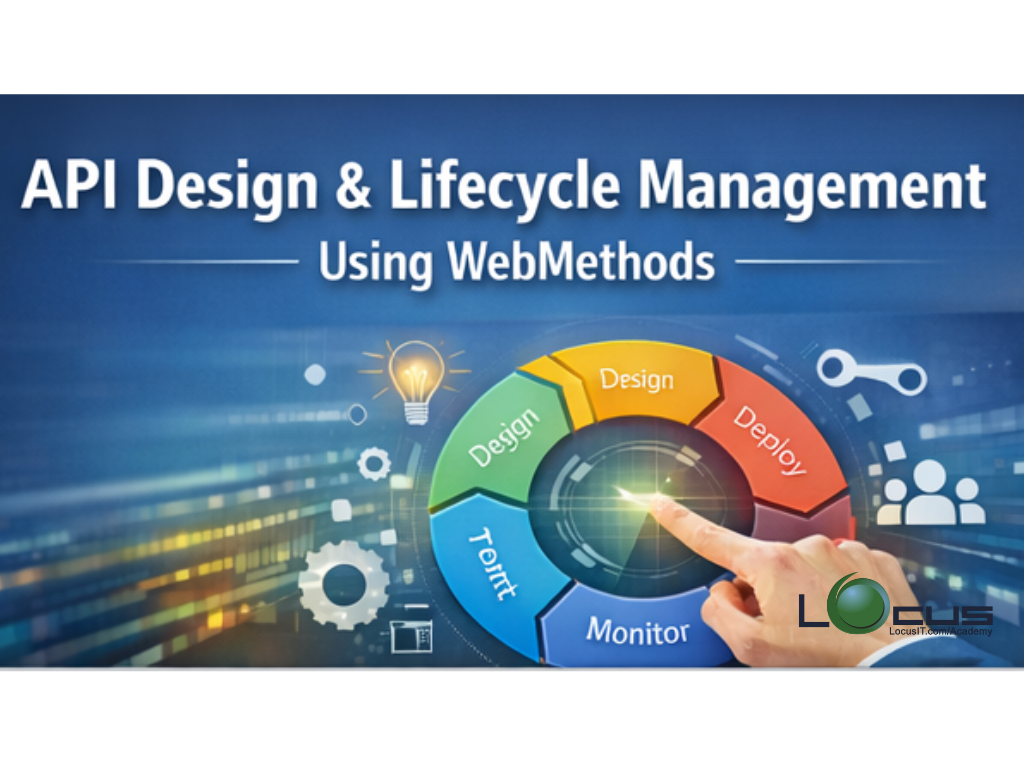
Module 7: API Lifecycle Management
- Understanding the API lifecycle stages:
- Design
- Develop
- Test
- Publish
- Deploy
- Retire
- Lifecycle governance using webMethods
- Promoting APIs across environments
- Versioning strategies and backward compatibility
Module 8: API Versioning & Change Management
- Why API versioning matters
- Versioning strategies (URI, Header, Query-based)
- Managing multiple API versions in API Gateway
- Deprecation and retirement strategies
- Impact analysis and change control
Module 9: API Policies & Traffic Management
-
- Introduction to API policies
- Rate limiting and throttling
- Quota management
- SLA enforcement
- Caching policies for performance
- Custom policies and policy sequencing
Module 10: API Monitoring, Analytics & Troubleshooting
- API monitoring capabilities in API Gateway
- Runtime analytics and dashboards
- Performance metrics and KPIs
- Error tracking and logging
- Troubleshooting API failures
- Alerting and operational insights
Module 11: Developer Portal & API Consumption
- Overview of webMethods Developer Portal
- Publishing APIs to the portal
- API documentation and onboarding
- Managing applications and subscriptions
- Consumer lifecycle management
Module 12: API Governance & Best Practices
- Enterprise API governance models
- Design-time vs runtime governance
- Policy enforcement strategies
- Compliance and audit considerations
- API reuse and standardization
Module 13: CI/CD and API Automation (Optional / Advanced)
- API lifecycle automation concepts
- Integrating APIs with CI/CD pipelines
- Automating API deployment and promotion
- Managing APIs across environments
- DevOps best practices for APIs
Module 14: Real-World Use Cases & Best Practices
- Enterprise API use cases
- Common design and lifecycle pitfalls
- Performance and scalability considerations
- Security and governance best practices
- Lessons learned from production deployments
Module 15: Capstone / Hands-On Lab
- End-to-end API lifecycle implementation
- Design, secure, publish, and monitor an API
- Apply policies and versioning
- Expose API via Developer Portal
- Review and optimization

Reviews
There are no reviews yet.