


Description
Introduction:
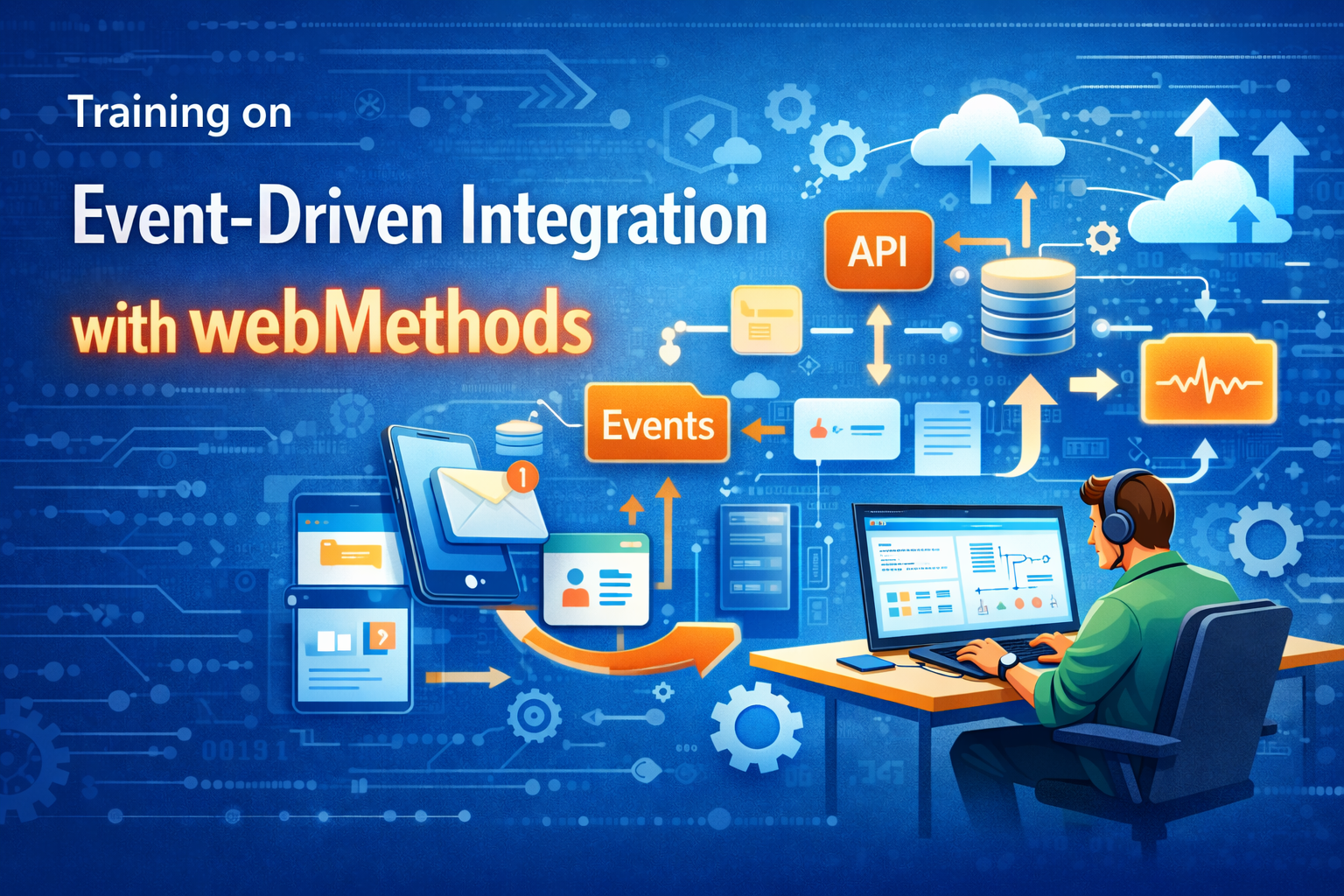
Event-driven integration has become a cornerstone of modern enterprise architectures, enabling systems to react to real-time events and ensuring seamless communication between applications. This training focuses on leveraging WebMethods Integration Server and related components to build scalable, reliable, and responsive event-driven solutions. Participants will learn how to capture, process, and route events across diverse systems, integrating both cloud-based and on-premise applications.
By the end of this course, participants will understand the architecture, design patterns, and best practices for building event-driven integrations using WebMethods, improving business agility and system responsiveness.
Prerequisites:
- Basic understanding of WebMethods Integration Server and its components.
- Familiarity with SOA (Service-Oriented Architecture) principles.
- Knowledge of APIs, messaging systems, and REST/SOAP services.
- Experience in Java or scripting languages is advantageous but not mandatory.
- Understanding of enterprise integration patterns and messaging concepts like publish-subscribe, queues, and topics is helpful.
Table of Contents
Module 1: Introduction to Event-Driven Integration
- What is Event-Driven Architecture (EDA)
- Benefits of event-driven integration over traditional request-response integration
- Key components in WebMethods supporting EDA
- Use cases and real-world scenarios
Module 2: WebMethods Event-Driven Architecture Overview
- Event sources and event consumers
- Messaging infrastructure in WebMethods
- Integration Server vs. Broker/Universal Messaging for event handling
- Event processing patterns: synchronous vs. asynchronous
Module 3: Universal Messaging in WebMethods
- Overview of Universal Messaging (UM)
- Topics, queues, and channels
- Configuring UM for event-driven integration
- Best practices for message persistence and delivery
Module 4: Developing Event-Driven Flows
- Creating triggers and event subscriptions
- Event-driven flow services
- Handling messages in flow services
- Error handling and retries for event processing
Module 5: Integration with External Systems
- Consuming events from external sources (APIs, databases, SaaS applications)
- Publishing events to external systems
- Integrating with cloud platforms (e.g., AWS, Azure, Salesforce)
- Real-time vs. batch event integration
Module 6: Event Processing Patterns
- Publish-subscribe
- Event streaming
- Event sourcing
- Correlation and filtering of events
Module 7: Monitoring and Management
- Monitoring event flows in WebMethods
- Alerting and logging
- Performance tuning for high-throughput event processing
- Troubleshooting common issues
Module 8: Security Considerations
- Securing event channels and topics
- Authentication and authorization
- Data encryption in transit and at rest
- Compliance considerations
Module 9: Best Practices & Design Patterns
- Event-driven design principles
- Scaling event-driven solutions
- Avoiding pitfalls in asynchronous integrations
- Case studies and real-world examples
Module 10: Hands-On Labs / Practical Exercises
- Creating a basic event-driven integration flow
- Subscribing to a topic and processing messages
- Implementing error handling and logging
- End-to-end integration scenario
Module 11: Summary & Next Steps
- Recap of key concepts
- Additional resources for advanced learning
- Q&A and discussion
Reviews
There are no reviews yet.