


Description
Introduction
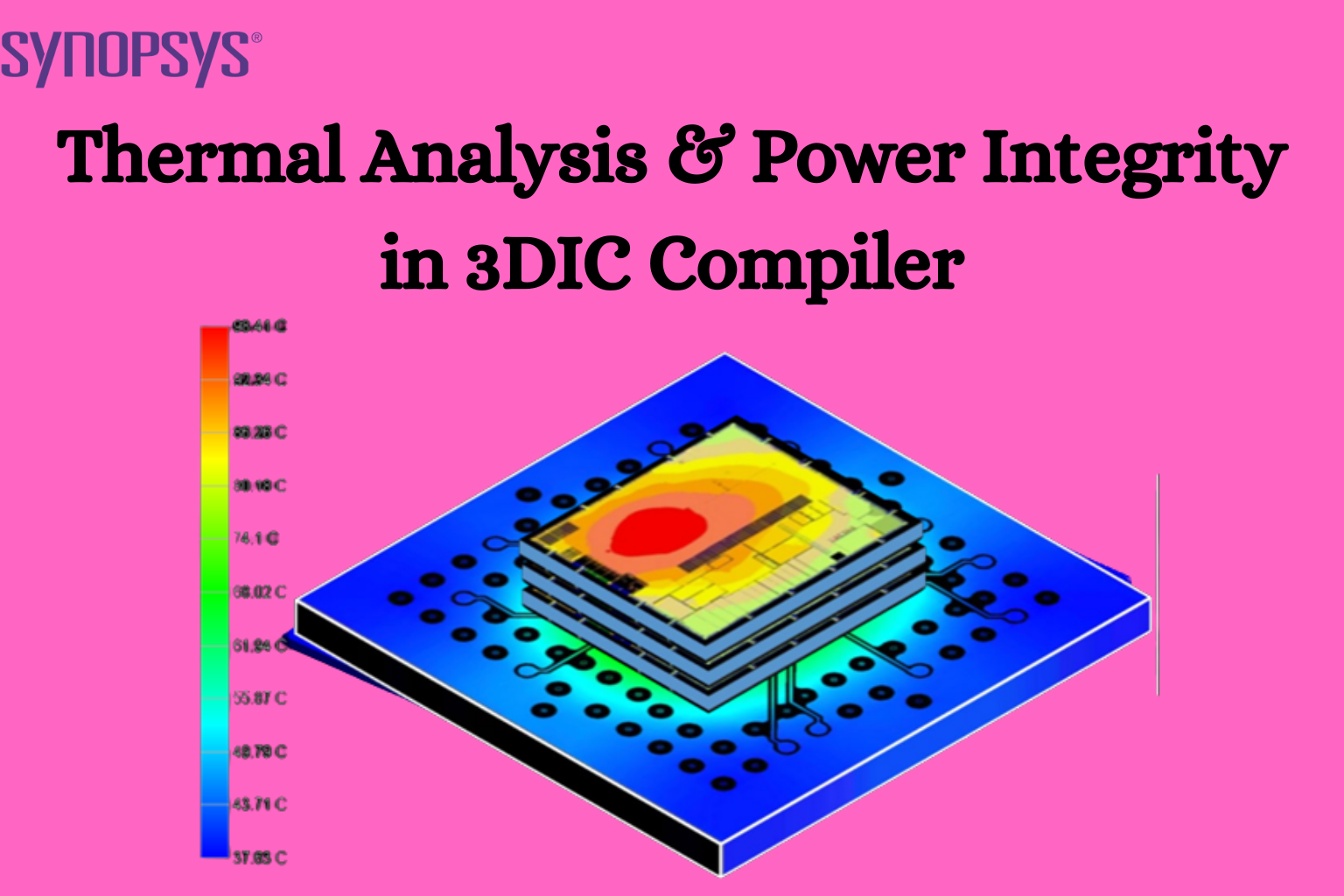
3DIC Compiler is an advanced electronic design automation (EDA) tool used for designing and analyzing three-dimensional integrated circuits. It supports thermal analysis and power integrity evaluation to ensure reliable performance in high-density chip stacking environments. This training focuses on understanding heat dissipation, power delivery networks, and co-analysis techniques to optimize performance and reliability in 3DIC designs.
Learner Prerequisites
- Basic understanding of VLSI design and semiconductor technology
- Familiarity with digital and analog circuit fundamentals
- Knowledge of power integrity and signal integrity concepts
- Awareness of thermal effects in electronic systems
- Basic understanding of EDA tools and chip design flow
- Interest in advanced IC packaging and 3D integration
Table of Contents
1. Introduction to Thermal Analysis and Power Integrity in 3DIC
1.1 Overview of 3D integrated circuit design
1.2 Importance of thermal and power analysis
1.3 Challenges in 3DIC systems
1.4 Role of 3DIC Compiler in analysis flow
1.5 Real-world applications of 3DIC technologies
2. Fundamentals of Thermal Analysis
2.1 Heat generation in semiconductor devices
2.2 Thermal conduction, convection, and radiation
2.3 Temperature distribution in 3D stacks
2.4 Thermal resistance and thermal vias
2.5 Impact of temperature on circuit performance
3. Basics of Power Integrity
3.1 Power delivery network fundamentals
3.2 Voltage drop and IR drop analysis
3.3 Current density challenges in 3DIC
3.4 Decoupling strategies for power stability
3.5 Noise effects in power distribution
4. Thermal Modeling in 3DIC Compiler
4.1 Thermal model creation and setup
4.2 Material properties for thermal simulation
4.3 Boundary conditions and constraints
4.4 Steady-state vs transient thermal analysis
4.5 Validating thermal models
5. Power Integrity Analysis Workflow
5.1 Setting up power grids in 3DIC
5.2 Analyzing IR drop in stacked designs
5.3 Identifying power hotspots
5.4 Optimizing power distribution networks
5.5 Verification of power integrity results
6. Coupled Thermal and Power Analysis
6.1 Interaction between power and thermal effects
6.2 Electro-thermal co-simulation techniques
6.3 Feedback loop between power and temperature
6.4 Impact of thermal effects on voltage drop
6.5 Optimization strategies for coupled analysis
7. Design Optimization Techniques
7.1 Reducing thermal hotspots
7.2 Improving power grid efficiency
7.3 Placement optimization for thermal control
7.4 Use of thermal vias and heat sinks
7.5 Trade-offs between power and thermal performance
8. Simulation and Verification in 3DIC Compiler
8.1 Setting up simulation environments
8.2 Running thermal simulations
8.3 Power integrity verification flow
8.4 Interpreting simulation results
8.5 Debugging design issues
9. Advanced Analysis Techniques
9.1 Multi-layer thermal modeling
9.2 Dynamic power analysis
9.3 Machine learning in thermal prediction
9.4 High-performance 3DIC optimization
9.5 Emerging trends in thermal-aware design
10. Real-World Applications of 3DIC Analysis
10.1 High-performance computing systems
10.2 AI and GPU chip architectures
10.3 Mobile and wearable devices
10.4 Automotive electronics systems
10.5 Data center hardware design
11. Future of Thermal and Power Analysis in 3DIC
11.1 AI-driven thermal optimization
11.2 Advanced cooling techniques
11.3 Next-generation 3D integration
11.4 Sustainable chip design approaches
11.5 Evolution of EDA tools in 3DIC
Conclusion
This training provides a complete understanding of thermal analysis and power integrity in 3DIC Compiler. It explains how heat and power distribution affect chip performance and reliability. Moreover, learners gain practical skills in simulation, modeling, and optimization techniques. As a result, they are prepared to design efficient and reliable 3D integrated circuits.



Reviews
There are no reviews yet.