


Description
Introduction:
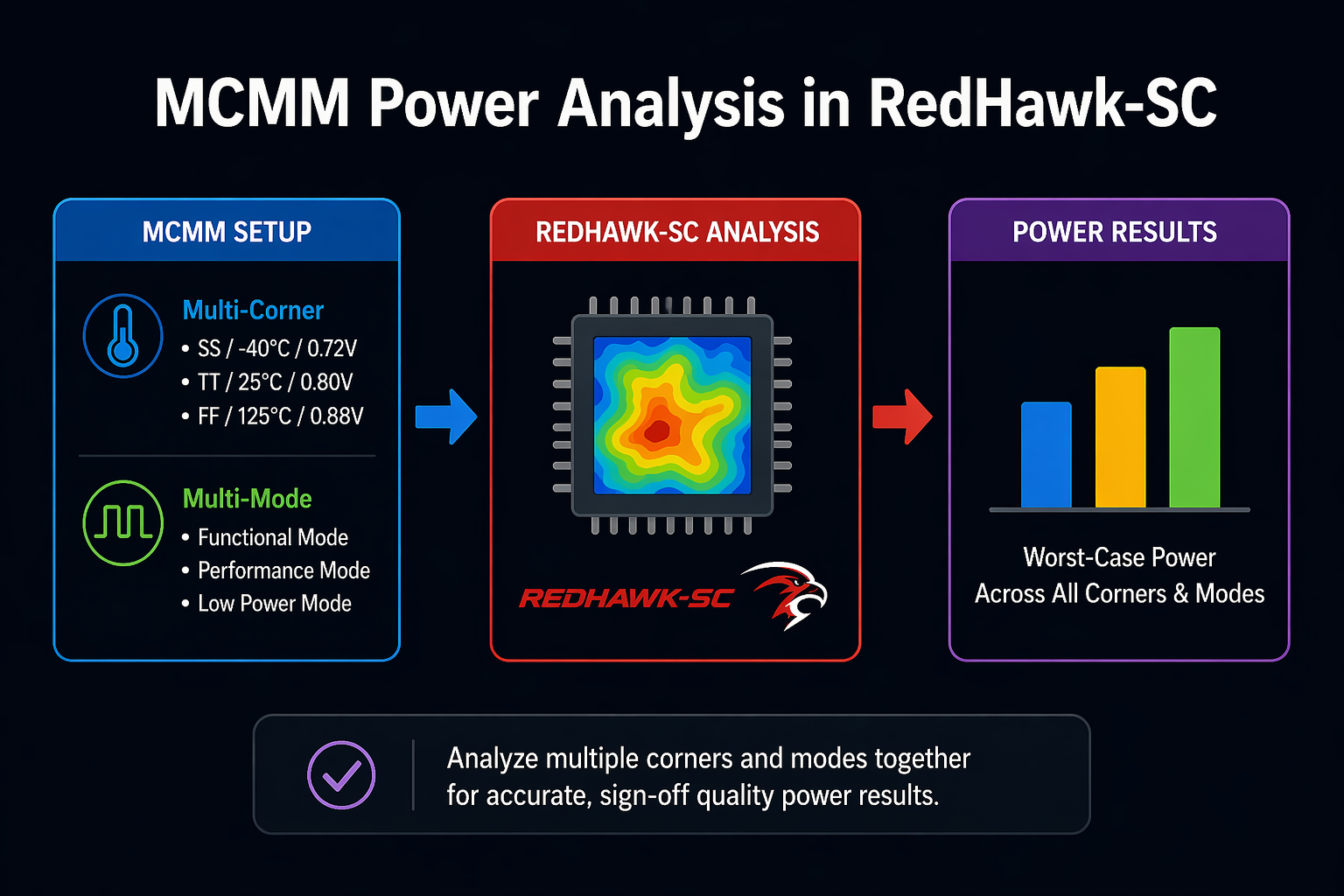
RedHawk-SC is an advanced power integrity and reliability analysis platform. It is used for static and dynamic IR drop, electromigration (EM), and noise analysis in modern SoC designs. Moreover, it supports multi-corner multi-mode (MCMM) analysis. Therefore, it ensures accurate power verification across different operating conditions, process variations, and functional modes for robust signoff.
In addition, it is widely used in advanced node designs (7nm and below). It helps manage increasing design complexity, large-scale power grids, and highly variable workloads. As a result, it enables early detection of voltage drops and reliability risks, improving design closure efficiency and reducing tapeout iterations.
Learner Prerequisites:
- Basic understanding of VLSI design flow and physical design concepts
- Familiarity with power integrity concepts such as IR drop and EM
- Knowledge of timing analysis, corners, and modes (STA basics)
- Exposure to UPF/CPF power intent concepts (recommended)
- Basic scripting and EDA tool usage experience (Tcl preferred)
Table of Contents
1. Introduction to MCMM Power Analysis in RedHawk-SC
1.1 Overview of Multi-Corner Multi-Mode (MCMM) methodology
1.2 Importance of MCMM in modern SoC power signoff
1.3 Power integrity challenges across corners and modes
1.4 Role of RedHawk-SC in MCMM-based analysis
1.5 Industry use cases and signoff scenarios
2. Fundamentals of MCMM Methodology
2.1 Definition of corners, modes, and scenarios
2.2 Relationship between PVT variations and power integrity
2.3 Scenario-based analysis framework
2.4 Correlation between timing and power MCMM flows
2.5 Common pitfalls in MCMM modeling
3. Design Data Setup for MCMM Analysis
3.1 Importing multi-mode design databases
3.2 Corner definition and characterization setup
3.3 Library and technology file configuration
3.4 Netlist and parasitic extraction integration
3.5 Design consistency checks across modes
4. Power Intent and UPF Integration
4.1 Understanding UPF-based power intent modeling
4.2 Multi-mode power state definitions
4.3 Power domain mapping across corners
4.4 Isolation, retention, and level shifter handling
4.5 Validation of power intent consistency
5. Vector and Activity Modeling for MCMM
5.1 Switching activity setup for multiple modes
5.2 Vectorless vs vector-based analysis approaches
5.3 Workload characterization per mode
5.4 Activity scaling across corners
5.5 Functional scenario correlation
6. MCMM Analysis Setup in RedHawk-SC
6.1 Defining MCMM scenarios in tool environment
6.2 Analysis configuration parameters
6.3 Grid generation and modeling setup
6.4 Solver configuration for multi-scenario runs
6.5 Runtime optimization strategies
7. Execution and Debug of MCMM Runs
7.1 Running multi-corner multi-mode simulations
7.2 Monitoring convergence and accuracy
7.3 Identifying worst-case scenarios
7.4 Debugging setup and configuration issues
7.5 Performance tuning for large designs
8. Results Analysis and Visualization
8.1 IR drop interpretation across MCMM scenarios
8.2 EM stress analysis across different modes
8.3 Dynamic vs static power comparison
8.4 Cross-corner result correlation techniques
8.5 Hotspot identification methods
9. Reporting and Signoff Methodology
9.1 MCMM analysis report generation
9.2 Signoff criteria definition and validation
9.3 Compliance checks and quality assurance
9.4 Documentation for tapeout readiness
9.5 Audit trail and result traceability
Conclusion:
MCMM-based power analysis in RedHawk-SC provides a comprehensive and production-grade verification approach. In addition, it captures variability across process, voltage, temperature, and functional modes. Therefore, it helps engineers identify worst-case power integrity and reliability issues early in the design cycle. Ultimately, it improves signoff confidence, reduces silicon risk, and accelerates tapeout convergence.



Reviews
There are no reviews yet.