


Description
Introduction:
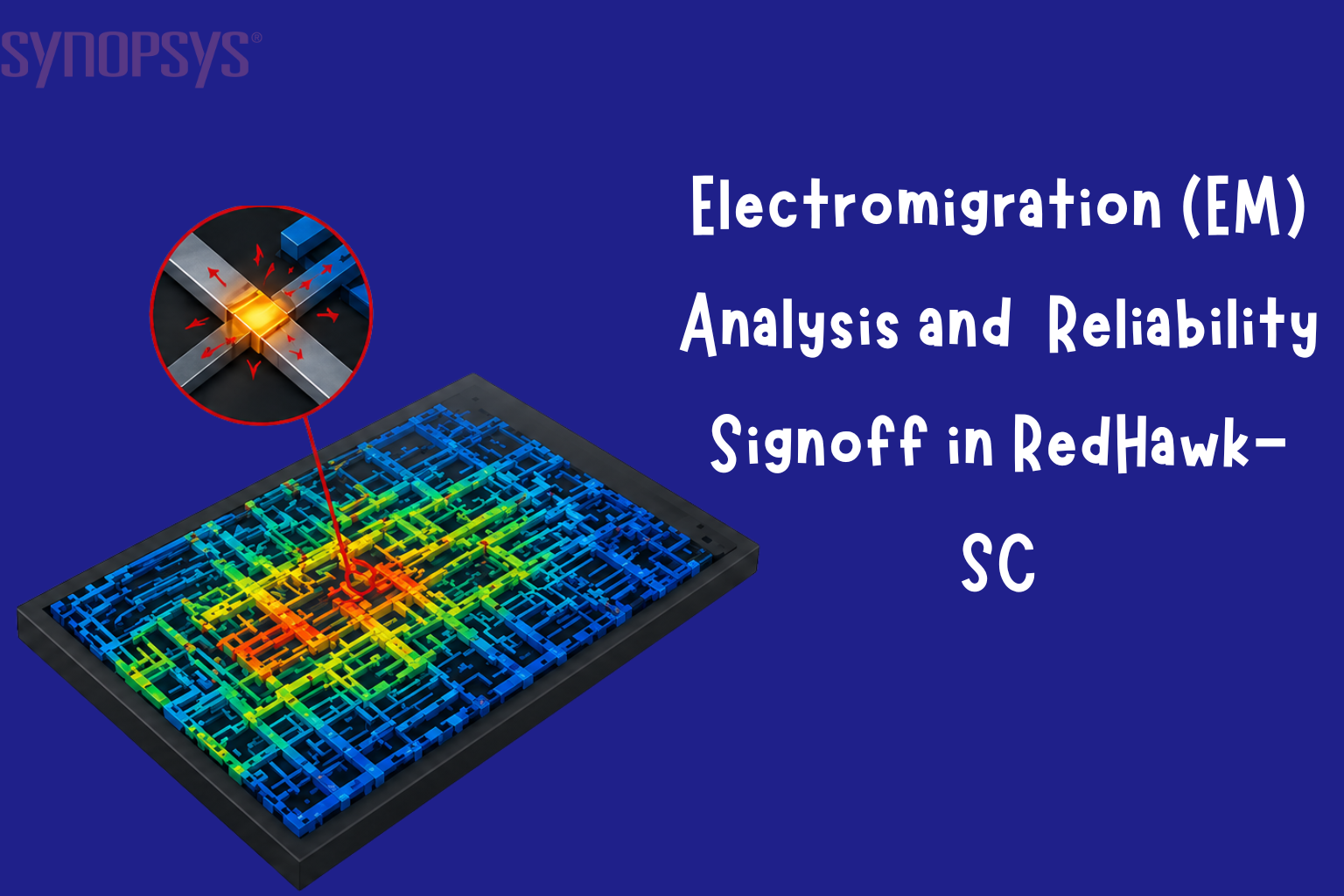
RedHawk-SC is an advanced power integrity and reliability analysis platform used for SoC and 3D-IC designs. It enables accurate static and dynamic analysis of power, noise, and reliability effects such as electromigration (EM), IR drop, and thermal impact across full-chip and hierarchical designs. Moreover, it is widely used in signoff flows to ensure robust silicon reliability at advanced technology nodes.
Learner Prerequisites:
- Basic understanding of VLSI design flow and CMOS fundamentals
- Knowledge of power distribution networks (PDN)
- Familiarity with physical design concepts and signoff flows
- Exposure to STA and timing analysis concepts is recommended
- Basic scripting knowledge (Tcl preferred)
Table of Contents
1. Introduction to Electromigration & Reliability Signoff
1.1 Fundamentals of electromigration (EM) in VLSI interconnects
1.2 Impact of EM on chip reliability and lifetime degradation
1.3 Overview of reliability signoff flow in advanced nodes
1.4 Role of power integrity in EM analysis
1.5 Industry challenges in sub-5nm reliability signoff
2. EM Theory and Failure Mechanisms
2.1 Physics of electromigration and electron flow effects
2.2 Black’s equation and lifetime prediction models
2.3 Temperature and current density dependencies
2.4 Void formation and hillock effects in interconnects
2.5 AC vs DC current impact on EM degradation
3. EM Signoff Methodology in RedHawk-SC
3.1 EM analysis flow in RedHawk-SC
3.2 Design data requirements and input preparation
3.3 Library characterization and EM rules setup
3.4 Voltage, current density, and stress mapping
3.5 Signoff criteria and violation thresholds
4. Power Grid and Current Density Analysis
4.1 Power grid extraction and modeling for EM analysis
4.2 Current density calculation methodologies
4.3 Hotspot identification in metal layers
4.4 Layer-wise EM stress distribution analysis
4.5 Correlation with IR drop and thermal effects
5. Dynamic and Static EM Analysis Techniques
5.1 Static EM analysis flow and interpretation
5.2 Dynamic switching activity impact on EM
5.3 Vector-based vs vectorless analysis methods
5.4 Time-dependent stress accumulation modeling
5.5 Worst-case scenario identification
6. Advanced EM Debugging & Root Cause Analysis
6.1 Identifying EM violation hotspots
6.2 Backtracking EM issues to RTL and physical design
6.3 Design margin analysis and fixing strategies
6.4 Metal fill and routing optimization impact
6.5 Iterative debugging methodology in signoff flow
7. Reliability Correlation: EM, IR Drop & Thermal Effects
7.1 Coupling between EM and IR drop
7.2 Thermal-aware EM degradation modeling
7.3 Multi-physics correlation analysis
7.4 Aging effects and long-term reliability prediction
7.5 Unified reliability signoff strategy
8. Optimization Techniques for EM Compliance
8.1 Wire sizing and routing optimization strategies
8.2 Via redundancy and reinforcement techniques
8.3 Power grid strengthening methods
8.4 Floorplan optimization for reduced EM stress
8.5 Design closure strategies for EM signoff
9. Automation and Reporting in RedHawk-SC
9.1 Tcl-based automation for EM analysis flows
9.2 Batch runs and regression setup
9.3 Report generation and interpretation
9.4 Custom dashboards for EM signoff tracking
9.5 Integration with P&R and signoff ecosystems
10. Advanced Node Challenges (7nm and Below)
10.1 Scaling impact on EM reliability
10.2 Increased current density challenges
10.3 Variability and aging effects
10.4 Design rule tightening and constraints
10.5 Future trends in reliability signoff
Conclusion:
Electromigration analysis in RedHawk-SC is a critical part of modern reliability signoff flows. In addition, it enables designers to predict and mitigate long-term failure risks in advanced semiconductor technologies. Therefore, it ensures robust, reliable, and manufacturable silicon designs.



Reviews
There are no reviews yet.