


Description
Introduction:
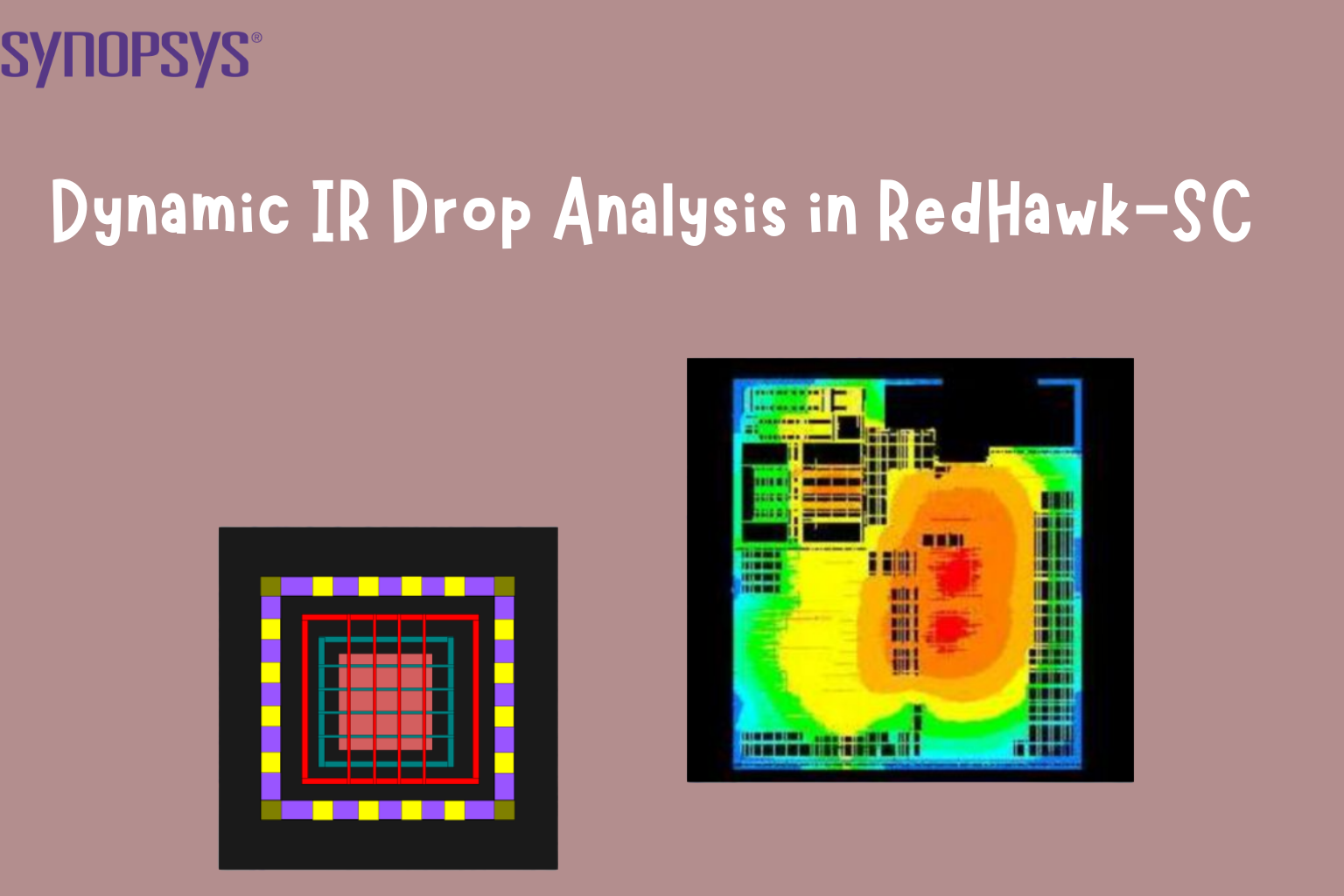
Dynamic IR Drop Analysis in RedHawk-SC is a key power integrity signoff methodology. It is used to analyze time-dependent voltage droop in complex SoC designs under real switching activity. Moreover, it enables accurate prediction of transient power supply noise. Therefore, it helps ensure silicon reliability in advanced semiconductor technologies.
Learner Prerequisites:
- Strong understanding of VLSI design flow and CMOS device behavior
- Fundamentals of power integrity (IR drop, EM, and noise coupling)
- Basic knowledge of PDN (Power Distribution Network) design concepts
- Familiarity with vector-based and vectorless power analysis methods
- Exposure to EDA tools used in physical verification and signoff flows
Table of Contents
1. Introduction to Dynamic IR Drop Analysis Fundamentals
1.1 Overview of power integrity challenges in advanced nodes
1.2 Physical meaning of dynamic IR drop in switching circuits
1.3 Impact of transient current surges on voltage stability
1.4 Correlation between activity patterns and voltage droop
1.5 Industry signoff requirements for dynamic IR drop
2. Power Grid and Design Data Preparation
2.1 Chip-level power grid architecture overview
2.2 Package and bump modeling for accurate IR analysis
2.3 Extraction of resistive and inductive parasitics
2.4 Design data flow integration into RedHawk-SC
2.5 Handling multi-mode multi-corner (MMMC) setups
3. Activity and Workload Modeling Techniques
3.1 Vector-based vs vectorless analysis methods
3.2 Generation of switching activity files (VCD/SAIF/FSDB)
3.3 Real workload modeling for worst-case scenarios
3.4 Clock gating and power gating impact on analysis
3.5 Stimulus scaling and coverage improvement strategies
4. RedHawk-SC Setup and Simulation Configuration
4.1 Project creation and library setup in RedHawk-SC
4.2 Power intent integration using UPF/CPF flows
4.3 Solver configuration for dynamic analysis accuracy
4.4 Defining time windows and analysis resolution
4.5 Running multi-scenario dynamic simulations
5. Dynamic IR Drop Analysis and Visualization
5.1 Time-based voltage drop waveform interpretation
5.2 Identification of transient IR drop hotspots
5.3 2D and 3D visualization of power grid response
5.4 Correlating switching activity with droop events
5.5 Comparative analysis across corners and modes
6. Debugging and Root Cause Analysis
6.1 Locating high current density regions
6.2 Analyzing power grid weak points and congestion
6.3 Clock tree influence on dynamic droop behavior
6.4 Signal switching correlation with voltage collapse
6.5 Debug strategies using hierarchical zooming
7. Optimization Techniques for Power Integrity Improvement
7.1 Power grid reinforcement strategies
7.2 Decap cell placement optimization
7.3 Metal layer and strap enhancement techniques
7.4 Activity reduction through design optimization
7.5 Iterative closure methodology in RedHawk-SC
8. Signoff Criteria and Verification Closure
8.1 Acceptable IR drop thresholds for advanced nodes
8.2 Correlation with static IR drop and EM analysis
8.3 Cross-corner validation and final checks
8.4 Reporting standards for tapeout readiness
8.5 Final signoff checklist and QA flow
Conclusion:
This comprehensive training on dynamic IR drop analysis in RedHawk-SC equips learners with in-depth knowledge of power integrity fundamentals, modeling techniques, simulation setup, debugging strategies, and optimization methods. Therefore, it prepares engineers for robust signoff in modern semiconductor designs and ensures reliable silicon performance.



Reviews
There are no reviews yet.